
Pre-Trial Diversion in Travis County Texas
The Reality of an Arrest and the Long-Term Cost of a Conviction
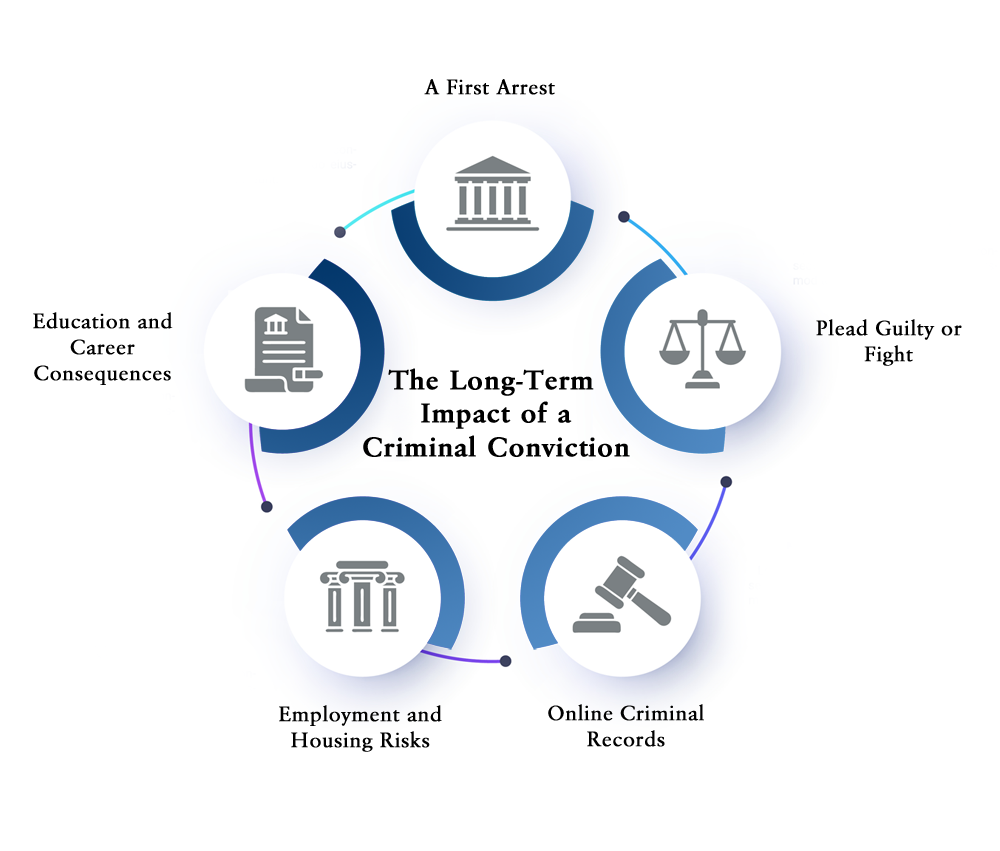
Imagine a 23-year-old college graduate named Michael who has never been in trouble with the law. One night, he makes a poor decision, gets arrested, and faces a misdemeanor criminal charge. With a promising career ahead of him, his future is suddenly uncertain.
Historically, someone in Michael’s position faced two difficult choices: plead guilty or fight the charges in court. Decades ago, criminal records were largely stored in physical courthouses and police filing cabinets, making them difficult for the average employer or landlord to find. Today, commercial background checks and online court databases make a criminal history visible within seconds.
If Michael had simply pleaded guilty, that single misdemeanor conviction could cause a prospective employer to pass over him five years later, despite his degree and credentials. A conviction can also disqualify him from rental housing, professional licensing, and educational advancement, allowing an error made at 23 to limit his opportunities well into his thirties, forties, and fifties.
How Pre-Trial Diversion Changes Michael’s Future
Pre-Trial Diversion (PTD) exists because Travis County prosecutors recognize that not every criminal case requires a conviction, a jail sentence, or a lifelong criminal record. For eligible individuals, particularly first-time offenders, PTD balances personal accountability with rehabilitation rather than pure punishment.
Through his defense attorney, Michael enters a diversion agreement instead of proceeding toward trial or taking a guilty plea. He agrees to six months of supervision, attends required educational courses, performs community service, pays any required fees, and fulfills his assigned obligations.
Because Michael complies with every condition, the prosecutor formally dismisses his charge. After the dismissal, Michael may become eligible to pursue an expunction under Texas law to clear the arrest itself. If an expunction is granted and the covered records are removed, Michael can apply for his dream job five years later without that conviction or public arrest record standing in his way.
Pre-Trial Diversion vs. Outright Dismissal vs. Acquittal
Pre-Trial Diversion is distinct from an outright dismissal or an acquittal at trial.
An outright dismissal happens when a defense attorney identifies serious flaws in the prosecution’s case, such as insufficient evidence, unlawful police conduct, missing witnesses, or constitutional violations, prompting the prosecutor to drop the charges without requiring the defendant to complete months of classes, supervision, or community service.
An acquittal occurs when a defendant pleads not guilty, takes the case before a judge or jury, and is found not guilty because the state failed to prove guilt beyond a reasonable doubt. An acquittal generally bars the state from retrying the defendant for the same offense under double jeopardy rules.
By contrast, Pre-Trial Diversion is an agreed, conditional arrangement. Prosecutors hold the charges open while the defendant earns a dismissal by satisfying strict terms. If the defendant succeeds, the case is dismissed; if they fail to comply, the state may terminate the agreement and resume active prosecution.
When the evidence is strong and taking the case to a jury carries a substantial risk of conviction, PTD can provide a more predictable and controlled alternative.
Misdemeanor Offenses Considered for Travis County Diversion
The Travis County County Attorney’s Office evaluates misdemeanor offenses for diversion based on whether the conduct was non-violent, involved no weapons or domestic abuse, and represents an isolated incident for an applicant with a clean record.
DWI Offenses
Under the specialized DWI track, prosecutors may consider:
- First-time Driving While Intoxicated (Class B misdemeanor)
- First-time Class A DWI with a blood alcohol concentration (BAC) between 0.08 and under 0.20
Theft and Property Offenses
- Class B theft ($100 to under $750)
- Class A theft ($750 to under $2,500)
- Retail shoplifting
- Theft of service
- Theft by check or issuance of bad checks
- Criminal mischief resulting in property damage under $2,500
- Criminal trespass of buildings or land
- Graffiti with pecuniary loss under $2,500
Drug and Contraband Offenses
- Possession of marijuana up to 2 ounces (Class B)
- Possession of marijuana between 2 and 4 ounces (Class A)
- Class C possession of drug paraphernalia
- Low-level misdemeanor-grade possession of controlled substances or dangerous drugs
Public Order and Traffic Offenses
- Driving while license invalid or suspended
- Class B disorderly conduct
- Non-violent harassment
- Interference with public duties
- Misdemeanor hindering apprehension or prosecution
- Misdemeanor false statements to obtain property or credit
Disqualifications and Excluded Offenses
Travis County enforces eligibility restrictions that exclude certain misdemeanor offenses and circumstances from diversion.
Assault and Domestic Violence Offenses
- Assault involving family violence or dating violence
- Assault causing bodily injury
- Continuous violence against the family
- Violations of protective orders or magistrate’s orders for emergency protection
Weapons Offenses
- Unlawful carrying of a weapon
- Offenses where a firearm or deadly weapon was displayed, carried, or discharged
Sexual Offenses
- Public lewdness
- Indecent exposure
- Offenses requiring sex offender registration under Texas law
DWI Diversion Disqualifications
Within the specialized DWI diversion track, disqualifying circumstances may include:
- Repeat DWI offenses
- Multiple pending DWI charges
- BAC of 0.20 or greater
- Crashes causing bodily injury or substantial property damage
- Commercial driver’s license (CDL) status, subject to applicable program restrictions and federal anti-masking regulations
Travis County Felony Diversion Offenses
Felony diversion is operated separately through the Travis County District Attorney’s Office and applies to designated non-violent property, fraud, document, and low-level drug crimes.
Offenses that may be considered include:
- Credit card or debit card abuse
- State jail and third-degree felony criminal mischief
- Making a false statement to obtain property
- Forgery
- Fraudulent use or possession of identifying information
- Gift to a public servant
- Felony graffiti
- Hindering apprehension or prosecution
- Hindering secured creditors
- Select cases of obstruction or retaliation, evaluated on their specific facts
- Low-level, state jail felony possession of a controlled substance
- Securing execution of a document by deception
- Tampering with or fabricating physical evidence
- Felony theft
- Felony theft of service
- Unauthorized use of a motor vehicle
Admission Criteria and Contract Terms
Entering Pre-Trial Diversion in Travis County requires meeting administrative and clinical eligibility requirements. Applicants generally must have limited or no prior criminal history, with prior adult convictions, deferred adjudications, or previous diversion completions potentially affecting eligibility.
Formal applications may be subject to deadlines, including requirements to apply before charging or within a specified period after arrest. Candidates may also be required to complete clinical screening, such as the Driver’s Risk Inventory through Travis County Counseling and Education Services, to assess substance use and mental health needs.
Once accepted, participants sign a formal agreement that may last 6 to 12 months, depending on the program and circumstances.
Standard Program Requirements
- Obey all laws and avoid new arrests
- Attend all scheduled appointments with supervising authorities
- Complete designated community service hours
- Pay documented restitution to victims
- Complete court-approved counseling or educational classes
- Pay required program and assessment fees
- Maintain updated contact information
- Complete all obligations within established deadlines
- Observe any required no-contact conditions
Additional Alcohol- or Drug-Related Requirements
Depending on the program, participants may also be required to:
- Submit to scheduled or random alcohol and drug screenings
- Refrain from alcohol and illicit substance use
- Install an ignition interlock device
- Wear a continuous alcohol monitoring device
- Attend a Mothers Against Drunk Driving (MADD) Victim Impact Panel
- Complete substance abuse education, counseling, or treatment
Participants must fulfill every applicable condition of their agreement. Failure to comply can result in termination from the program and renewed criminal prosecution.
 Post-Diversion Record Expunction
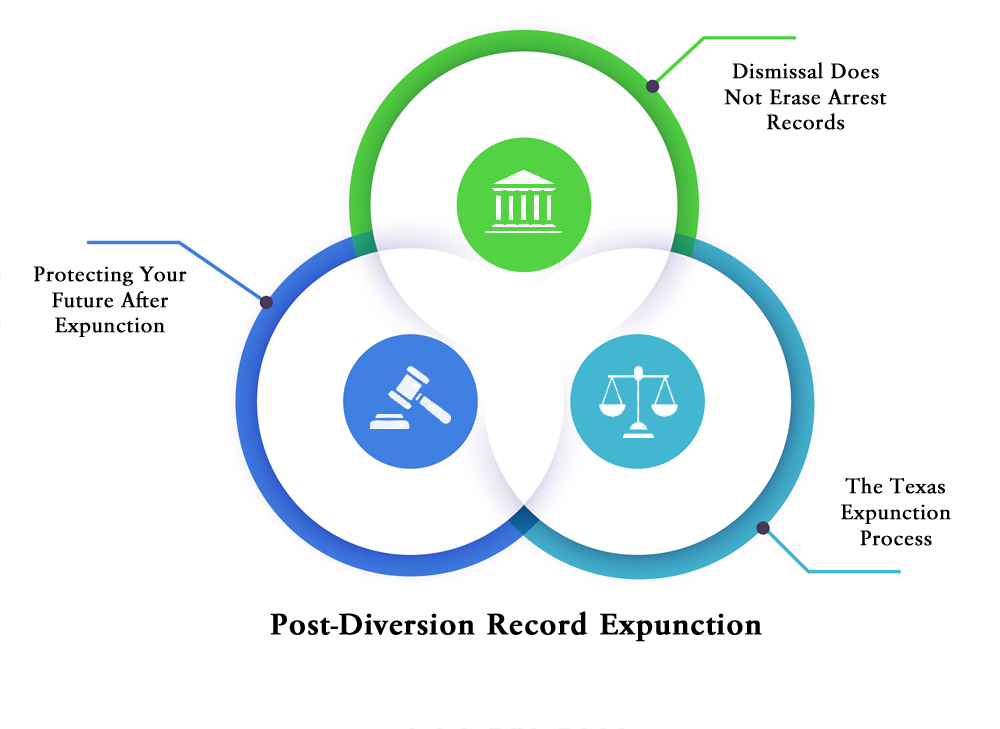
Successful completion of Pre-Trial Diversion leads to a formal dismissal of the criminal charges, but dismissal does not automatically purge an arrest from public databases, police files, or jail records.
Under Texas expunction law, an individual whose case is dismissed through a diversion program may qualify to file a formal civil petition for expunction in district court, depending on the nature of the charge, the dismissal, and other statutory requirements.
Once a district judge signs an expunction order, covered law enforcement departments, prosecutorial offices, court clerks, and other entities subject to the order must comply with its requirements to return, remove, or destroy covered records.
Once an arrest has been legally expunged, the individual can generally deny its occurrence on job, housing, and licensing applications, subject to limited statutory exceptions.
For Michael, this means that successfully completing diversion, obtaining a dismissal, and securing an expunction could prevent one mistake at age 23 from continuing to affect his employment, housing, education, and professional opportunities for decades.
The ultimate goal is not simply to avoid jail or probation. It is to protect his future by resolving the criminal case without a conviction and, when legally available, removing the arrest record itself.
Frequently Asked Questions About Pre-Trial Diversion in Travis County
What Is the Difference Between Pleading Guilty and Pre-Trial Diversion in Travis County?
Pleading guilty in Travis County generally means accepting responsibility for a criminal offense and potentially receiving a conviction that can affect employment, housing, and future opportunities. Pre-trial diversion, on the other hand, gives eligible defendants an opportunity to have their criminal charges dismissed after successfully completing certain requirements, potentially avoiding a criminal conviction and qualifying for eventual expunction of their arrest records.
For example, imagine a 23-year-old college graduate named Emily who is arrested for a first-offense DWI after driving home from a night out with friends. Emily has never been arrested before, and she worries that a criminal conviction could jeopardize her career before it even begins. Rather than pleading guilty and potentially receiving a criminal conviction, her attorney negotiates an agreement allowing her to participate in a pre-trial diversion program for eligible first-time DWI offenders.
Under the agreement, Emily must complete alcohol education classes, perform community service, comply with alcohol testing requirements, install an ignition interlock device if required, and avoid further legal trouble during the diversion period. Her criminal case remains pending while she completes these requirements, but under this hypothetical agreement, she does not have to plead guilty. After successfully completing the program, the prosecutor dismisses the DWI charge. Emily avoids a criminal conviction and may also qualify to have records of her arrest expunged under Texas law, helping protect her future employment, housing, and professional opportunities.
However, not every pre-trial diversion program operates under the same rules. Some agreements, particularly those involving DWI offenses, may require admissions of guilt, plea agreements, waivers of certain legal rights, or other significant commitments. Before entering a diversion program, an experienced criminal defense attorney should carefully review the agreement, explain the potential consequences, and determine whether pre-trial diversion offers a better outcome than pursuing a dismissal or acquittal through the traditional criminal defense process.
What Happens If You Fail to Complete Pre-Trial Diversion?
Failing to follow the rules of a pre-trial diversion program can put you at risk of being removed from the program and having your criminal case reopened. Common violations include missing appointments, failing drug or alcohol tests, not completing community service or counseling, or being arrested for another offense.
The consequences can be especially serious in Travis County’s DWI diversion programs. Depending on the agreement, failing the program could result in a criminal conviction and may limit your ability to fight the original charges in court.
Having a criminal defense attorney represent you throughout the program can make a significant difference. If you’re accused of breaking the rules, your attorney can investigate what happened, challenge inaccurate test results, present evidence of misunderstandings or emergencies, and negotiate with prosecutors to keep you in the program. If necessary, your attorney can request a hearing to explain the circumstances and fight your removal.
The goal is to prevent a mistake, misunderstanding, or disputed violation from costing you the opportunity to complete the program, have your charges dismissed, and potentially qualify for expungement.
Is Pre-Trial Diversion a Plea Deal?
Pre-trial diversion is a negotiated agreement with the prosecutor, but it is not necessarily a traditional plea bargain. In a conventional plea bargain, the defendant often agrees to plead guilty or no contest in exchange for reduced charges, a recommended sentence, or other concessions. Depending on the arrangement, that can still result in a criminal conviction.
With pre-trial diversion, the objective is different. The defendant agrees to complete specific conditions in exchange for the opportunity to have the charges dismissed without a conviction. The distinction is important because avoiding a conviction can protect future employment, housing, educational, and professional opportunities.
Is It Better to Go to Trial or Accept Pre-Trial Diversion?
That depends on the strength of the prosecution’s evidence, the available defenses, the potential punishment, and the risks associated with each option. If the police conducted an unlawful search, evidence was improperly obtained, witnesses are unreliable, or prosecutors cannot prove the allegations beyond a reasonable doubt, fighting the charges may produce an outright dismissal or acquittal without months of supervision, program fees, counseling, or community service.
However, when prosecutors possess strong admissible evidence, going to trial can create substantial risks. A conviction may result in fines, probation, jail time, and a criminal record. Pre-trial diversion may provide a more predictable path toward dismissal, provided the defendant meets every requirement. The goal should not simply be to qualify for diversion. It should be to achieve the best possible legal outcome based on the circumstances of the case.
What Is the Difference Between Pre-Trial Diversion and Deferred Adjudication in Travis County?
Pre-trial diversion and deferred adjudication both give eligible people in Travis County an opportunity to avoid a criminal conviction, but they work differently. Pre-trial diversion generally does not require pleading guilty and can result in dismissed charges and the opportunity to completely erase the criminal record. Deferred adjudication usually requires pleading guilty or no contest, followed by probation, and although the charges can eventually be dismissed without a conviction, the criminal record may remain.
The biggest advantage of pre-trial diversion is the opportunity to avoid both a conviction and a permanent criminal record, but fewer people may qualify. Deferred adjudication may be available to people who do not qualify for pre-trial diversion, but it can involve lengthy probation and leave a criminal record that is harder to erase. Some deferred adjudication cases qualify for record sealing, which can prevent most employers and the general public from seeing the case, but this requires an additional legal process and may involve more time and expense. If someone fails either program, they could face serious consequences, including prosecution or a criminal conviction.
Can You Go Back to Jail While Participating in Pre-Trial Diversion?
Yes. Violating pre-trial diversion requirements can result in removal from the program, renewed criminal prosecution, or even jail time.
For example, imagine Sarah tests positive for drugs six months into her diversion program. She could face removal from the program and possible jail time if she also violated her bond conditions. However, these consequences are not automatic. Her attorney may be able to challenge the test results, explain the circumstances, and negotiate an opportunity for Sarah to remain in the program.
 What Are the Disadvantages of Pre-Trial Diversion?
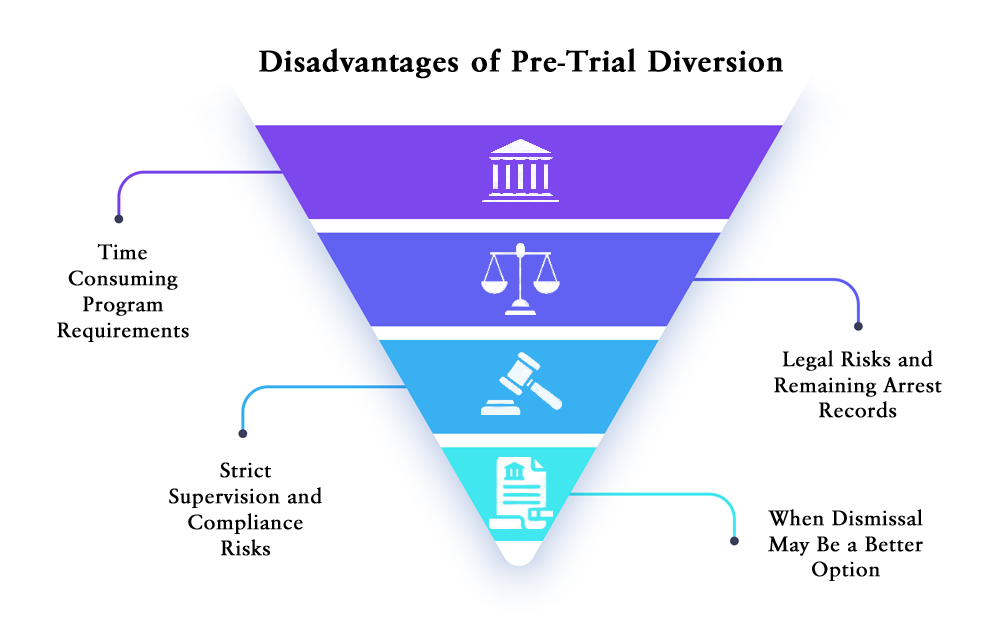
Although pre-trial diversion offers an opportunity to avoid a criminal conviction, it also comes with significant obligations. Participants may spend months attending court appearances, completing educational programs, undergoing drug or alcohol testing, performing community service, and following strict rules. These requirements can interfere with work, family responsibilities, travel, and everyday life.
The reality is that many people struggle to follow every rule and live under a microscope for six months or longer. Constant supervision, mandatory appointments, random drug testing, and strict restrictions can make everyday life stressful and difficult to manage. Even a single mistake, missed appointment, or misunderstanding could jeopardize someone’s participation in the program and potentially expose them to criminal prosecution.
There are also legal risks. Some agreements require defendants to waive important legal rights and accept predetermined consequences if they fail to complete the program or comply with court orders. Even after successfully completing diversion and having the charges dismissed, the arrest record may remain accessible until an expunction is granted.
Most importantly, someone with a strong legal defense may be able to obtain an outright dismissal or reduction of charges without accepting the restrictions, costs, and risks of pre-trial diversion. This is why an experienced criminal defense attorney should conduct a thorough investigation before recommending diversion.
Does Pre-Trial Diversion Show Up on Background Checks for Employment, Housing, or Adoption?
It can. Participating in pre-trial diversion does not automatically erase an arrest or prevent it from appearing in public records. While the case remains pending, employers, landlords, licensing boards, and other organizations conducting background checks may discover the arrest or criminal charge, depending on the records available and applicable screening laws.
Successful completion of diversion can lead to dismissal and, when legally eligible, expunction. An expunction can remove qualifying records from public access and provide important legal protections regarding disclosure. However, expunction is a separate legal process, and its effects and exceptions must be evaluated carefully. This distinction is especially important for people seeking professional licenses, government positions, security clearances, or adoption approval, where disclosure requirements may differ from ordinary employment applications.
What Are the Fees for Pre-Trial Diversion in Travis County, and How Can a Criminal Defense Lawyer Reduce Them?
Pre-trial diversion in Travis County can cost anywhere from $0 to $3,500 or more, depending on the criminal charge, program requirements, length of supervision, and additional expenses. However, many of these costs may be reduced, waived, or avoided altogether with the help of an experienced criminal defense lawyer.
A defense attorney can negotiate directly with prosecutors, challenge unnecessary requirements, request financial hardship waivers, and seek changes to monitoring conditions. The goal is to make pre-trial diversion less expensive, less restrictive, and easier to complete successfully.
1. Administrative Entry Fees: $0 to $152
Some diversion programs charge administrative fees, while others, including certain first-time DWI programs, may waive them.
How an attorney can reduce the cost: A criminal defense lawyer can determine whether the fee applies, submit evidence of financial hardship, request an available waiver, or negotiate for a diversion agreement that does not impose unnecessary administrative expenses. When legally permitted, an attorney may also request reduced payments or additional time to pay.
2. Clinical Evaluations: Approximately $55
Participants may be required to complete an assessment to determine whether they need substance abuse education, counseling, or treatment.
How an attorney can reduce the cost: A lawyer can determine whether an existing professional evaluation satisfies program requirements, request approval to use a qualified lower-cost provider, or challenge duplicative assessments. An attorney can also present evidence showing that additional evaluations are unnecessary, potentially preventing more expensive treatment recommendations.
3. Educational Classes and Treatment: $125 to $3,000+
Some participants only need to complete an educational course, while others may be required to attend months of counseling or intensive treatment.
How an attorney can reduce the cost: A criminal defense lawyer can present evidence supporting a less intensive treatment recommendation, negotiate for educational classes instead of more expensive programs when clinically appropriate, and request credit for counseling or treatment already completed. An attorney may also seek approval for affordable providers, insurance-covered services, or sliding-scale programs.
For example, if Pam is ordered to complete a $2,000 outpatient treatment program despite an assessment indicating that a $200 educational course would adequately address her needs, her attorney could present the assessment and negotiate for the less expensive option.
4. Ignition Interlock and Alcohol Monitoring: $420 to $1,800+
Ignition interlock devices, SCRAM ankle monitors, and portable breathalyzers can become some of the most expensive diversion requirements because participants may pay monthly rental, installation, and maintenance fees.
How an attorney can reduce the cost: A lawyer can challenge monitoring conditions that are unnecessary or overly restrictive, request a less expensive monitoring method, seek early removal after demonstrated compliance, and negotiate shorter monitoring periods. Some changes require court approval, particularly when monitoring is imposed as a condition of bond.
For example, reducing a $125 monthly monitoring requirement from 12 months to six months could save Pam $750 in rental fees alone.
5. Random Drug and Alcohol Testing: $15 to $50 Per Test
Repeated testing can become expensive, especially when participants must pay for every screening throughout a lengthy diversion agreement.
How an attorney can reduce the cost: A lawyer can negotiate for less frequent testing when appropriate, request a reduction in testing after months of compliance, seek approval for lower-cost testing providers, or challenge unnecessary duplication between different monitoring requirements.
For example, reducing testing from four times per month to twice per month at $35 per test would save Pam $420 over six months.
6. Victim Restitution: Depends on Actual Losses
When criminal allegations involve damaged property, theft, or a vehicle collision, participants may be required to compensate victims for documented financial losses.
How an attorney can reduce the cost: A criminal defense lawyer can examine repair estimates, receipts, insurance payments, and other evidence to determine whether the requested restitution is accurate. An attorney can dispute inflated or unsupported claims, prevent duplicate recovery for losses already reimbursed, and negotiate a reasonable payment schedule.
For example, if a victim requests $4,000 for vehicle repairs but insurance has already covered $3,000, Pam’s attorney could challenge any attempt to collect the same $3,000 twice.
7. Expunction and Record-Clearing Costs: $450 to $600+ in Potential Filing and Service Fees
Completing pre-trial diversion may result in dismissal of the criminal charge, but dismissal does not automatically erase the arrest record. Eligible individuals generally must pursue a separate expunction process.
How an attorney can reduce the cost: A lawyer can determine whether the client qualifies for expunction, identify applicable filing-fee exemptions or hardship waivers, avoid unnecessary filing and service expenses, and ensure the petition is prepared correctly to reduce the risk of costly mistakes. An attorney may also negotiate the cost of handling the expunction as part of the overall legal representation.
Actual court fees, service expenses, and attorney fees vary, and not every dismissed case qualifies for expunction.
8. The Length of Pre-Trial Diversion: Six to 24 Months or Longer
The longer someone remains in a diversion program, the more they may spend on monitoring, testing, transportation, missed work, and other recurring obligations.
How an attorney can reduce the cost: A criminal defense lawyer can negotiate a shorter diversion agreement from the beginning, request credit for conditions already completed, or seek early termination when the agreement and prosecutor’s policies permit it.
For example, reducing Pam’s diversion agreement from 12 months to six months could eliminate six months of monitoring, testing, and supervision expenses, potentially saving hundreds or thousands of dollars.
9. Attorney Fees: An Investment That May Reduce Overall Expenses
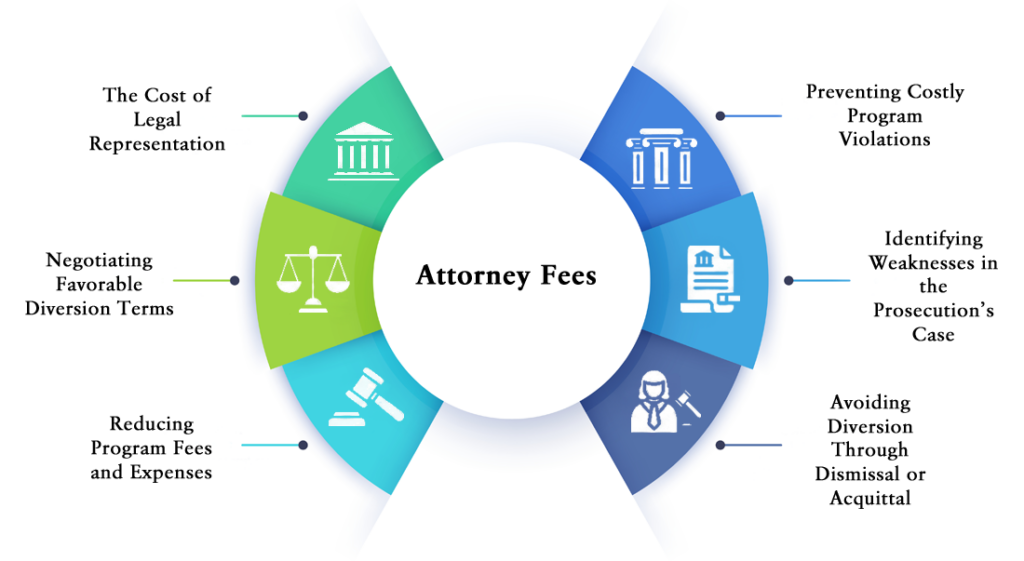
Hiring a criminal defense lawyer involves legal fees, but effective representation may help reduce the total financial burden of pre-trial diversion.
An experienced attorney can review every proposed condition, negotiate with prosecutors, request available fee waivers, challenge unnecessary expenses, and help prevent violations that could result in additional costs or renewed criminal prosecution.
Most importantly, a criminal defense lawyer may discover weaknesses in the prosecution’s case that make pre-trial diversion unnecessary altogether.
The most valuable financial benefit of hiring an experienced criminal defense lawyer may not be negotiating cheaper pre-trial diversion. It may be avoiding pre-trial diversion entirely by resolving the case through a dismissal, acquittal, or reduction of charges.
Schedule Your Free Criminal Defense Case Evaluation
At The Law Office of Ken Gibson, every criminal case begins with a thorough investigation to uncover weaknesses in the prosecution’s evidence and identify opportunities to have charges dismissed or reduced. You may or may not want to participate in pre-trial diversion, depending on the facts and circumstances of your case, especially if there is a way to get your charges dismissed without months of supervision, restrictions, and expenses. During your free, no-obligation case evaluation, we will listen to your story, discuss your legal options, and explain how we can fight the charges against you. No matter which legal strategy we pursue, our goal remains the same: no criminal conviction and no permanent criminal record.
Submit your contact information below to schedule your free case evaluation.
Schedule a Free Case Evaluation Online