

A Track Record of Having Charges Dismissed, Acquitted, and Reduced With Flexible Payment Plans
Walk Away Without a Conviction or Criminal Record, as if It Never Happened.
Being accused of a crime turns your entire world upside down. Along with the shock, feelings of guilt, anxiety, and depression can quickly take over. It is natural to worry about what comes next: the possibility of jail time, the risk to your career, and the fear that a permanent scarlet letter could strip away your dignity and reputation.
You do not have to carry that burden alone.
While the situation you are in may seem dire and bleak, there is a way forward. Your case can end with the charges being dismissed, an acquittal, or the charges being reduced without a conviction or permanent criminal record.
We Believe In
Having Your Charges Dismissed
Our firm has a track record of having charges dismissed, securing acquittals, and getting charges reduced.
No Conviction or Criminal Record
No one deserves a conviction or permanent criminal record. Our goal is to prevent both from happening.
Flexible Payment Plans That Fit Your Budget
We offer affordable legal fees and flexible payment plans that fit almost every situation.
At The Law Office of Ken Gibson, the firm’s mission is to protect you, alleviate the stress and anxiety of your pending criminal charges so that you can sleep at night, and achieve the best possible outcome: restoring your life, freedom, and dignity without a criminal conviction or record.
The Law Office of Ken Gibson stands up for the wrongfully accused, proves innocence, and restores life, freedom, and dignity to those facing criminal charges. Their mission is to ensure clients walk away without a criminal record and with their future fully untarnished by the past.
You Are as Powerful as The Opposing Side
You have as much power as the other side of the law. Read that again. You hold the same power as the other side of the court only if you act. Walking away from this without a conviction and permanent record requires you honoring and investing in yourself right now. By investing in yourself now (both by educating yourself and investing in a legal defense), you can look back years from now and pat yourself on the back for making certain your future has no obstacles in the way.

The Way Through This
If you are reading this after being arrested or accused of a crime, you may be scared, angry, embarrassed, or simply overwhelmed. You may not be sleeping. Your mind may keep going to the worst possible outcome. You may be worried about going to jail, losing your job, what your family will think, your reputation, or whether this is going to follow you for the rest of your life.
Ken Gibson understands.
Ken Gibson has represented people in exactly this position. And one of the first things Ken wants you to understand is this: what is happening to you right now does not have to define the rest of your life.
There is a way through this.
Reviews
Sample Google and Facebook Reviews:
“Ken Gibson got my DWI completely dismissed, as if it never happened.”
SA
“I was arrested for assault and public intoxication, and it could have cost me my job. Fortunately, Ken Gibson and Amando Pena found a way to have the charges completely dismissed. Thank you, guys!”
PJ
“Amando Pena got my domestic violence charge thrown out because of a lack of evidence. No conviction and no criminal record haunting me. Very grateful!”
LW
“I was arrested for DWI and fleeing and eluding. My life was on the line, and Ken got the charges reduced to a traffic citation with no conviction. Ken is the real deal, and he worked with me on a payment plan.”
AC

An Accusation Does Not Mean a Conviction
Being accused of a crime is just that: an accusation. It is an allegation that has not been proven. An arrest does not mean you are guilty, and it does not mean you will be convicted.
The outcome of your case has not been decided. With a strong defense, charges can be dismissed, reduced, or end in an acquittal. So do not convict and punish yourself before your case has even been decided.
That is where reframing begins. Reframing simply means looking at what happened from a different perspective. Instead of seeing this as the moment that ruined your life, begin to see it as something you can get through, learn from, and eventually leave behind.
This is one moment in your life. It does not have to define who you are or determine your future.
Testimonials
Charges Dimissed
Payment Plans
Expungement & Sealing
Attorneys On-Call 24-Hours
Most Criminal Accusations Never Make It to Trial
Most criminal cases are resolved before trial. Courts and prosecutors handle enormous caseloads and simply do not have the time or resources to take every case to a full trial. This creates opportunities for a skilled criminal defense lawyer to negotiate with prosecutors early on and pursue a full dismissal, reduced charges, or an alternative to conviction. These alternatives to a dismissal or reduced charge may include pretrial diversion, deferred adjudication, drug or alcohol treatment, mental health treatment, specialty courts, and other rehabilitation-based programs.

When Trial Readiness Strengthens Negotiations
But negotiations carry more weight when prosecutors know the defense is prepared to take the case to trial. Showing the prosecution that you are ready and willing to go to trial can cause them to reconsider their position, especially when the defense attorney has a proven track record of winning trials. If a dismissal or reduction is not an option, some clients will consider these alternatives:

Pretrial Diversion
Pretrial diversion in Texas is a formal legal agreement between you and the prosecutor. Instead of pleading guilty or taking your case in front of a jury, the prosecutor hits the pause button on your criminal case and sets up a probation-like trial period.
If you fulfill every condition of that agreement over a set number of months, the State drops your charges completely. It is not an automatic right or a standard sentence. It is an optional prosecutorial contract designed to give qualifying individuals a clean slate.
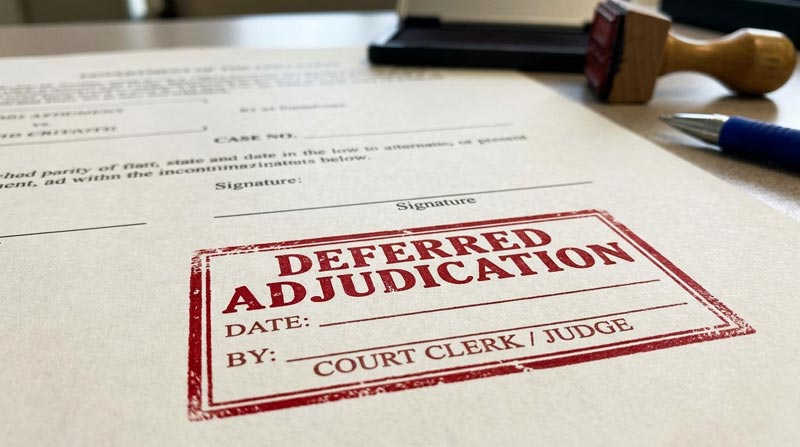
Deferred Adjudication
Deferred adjudication is a probation deal where the judge postpones finding you guilty. You plead guilty upfront, but instead of convicting you, the court puts your plea on hold while you complete probation rules like drug tests, community service, and counseling. If you finish every condition without getting arrested, the judge dismisses the case so you avoid a permanent conviction on your record. But if you slip up, the judge can immediately find you guilty and sentence you to the maximum jail time allowed by law.
Pretrial Diversion Versus Deferred Adjudication
Pretrial diversion is an agreement with the prosecutor where you never plead guilty in court, and completing the program results in a complete dismissal that can be entirely erased from your record through expunction. In contrast, deferred adjudication is court-ordered probation where you must plead guilty upfront, and while successful completion avoids a formal conviction, the arrest can only be sealed through a nondisclosure order rather than completely erased. Crucially, failing diversion merely restarts your criminal case, whereas violating deferred adjudication allows the judge to immediately find you guilty and impose the maximum statutory jail sentence.
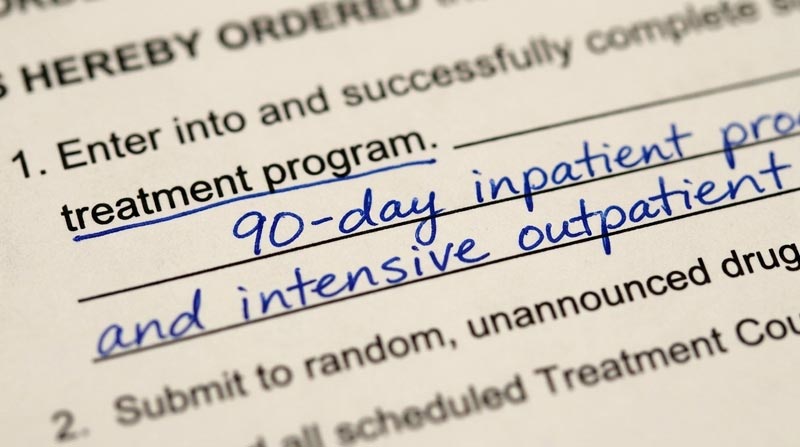
Drug or Alcohol Treatment
When drugs or alcohol contribute to an arrest, treatment may sometimes be part of an alternative resolution instead of simply pursuing a conviction and jail time. Depending on the charge, your history, and the circumstances of the case, this may include substance abuse counseling, outpatient or inpatient treatment, drug or alcohol testing, or participation in a court-approved treatment program.
Successfully completing treatment and other requirements may help you obtain a more favorable outcome, such as reduced charges, dismissal through a diversion program, or avoiding jail. The goal is to address the underlying substance abuse issue while reducing the long-term consequences of a criminal conviction.
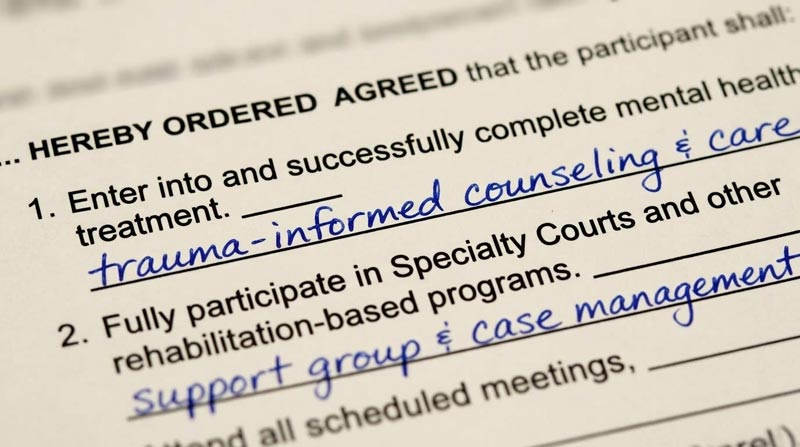
Mental Health Treatment, Specialty Courts, Trauma-Informed Care, and Other Rehabilitation-Based Programs
When mental health, substance abuse, or other underlying issues contribute to an arrest, there may be alternatives that focus on treatment and rehabilitation rather than punishment alone. Depending on the circumstances, these options may include mental health treatment, counseling, specialty courts, intensive supervision, community-based programs, or other services designed to address the issues and trauma that contributed to the alleged offense. Successfully completing the required program may help lead to reduced charges, dismissal, less jail time, or another favorable resolution while giving you an opportunity to address the underlying problem and move forward.
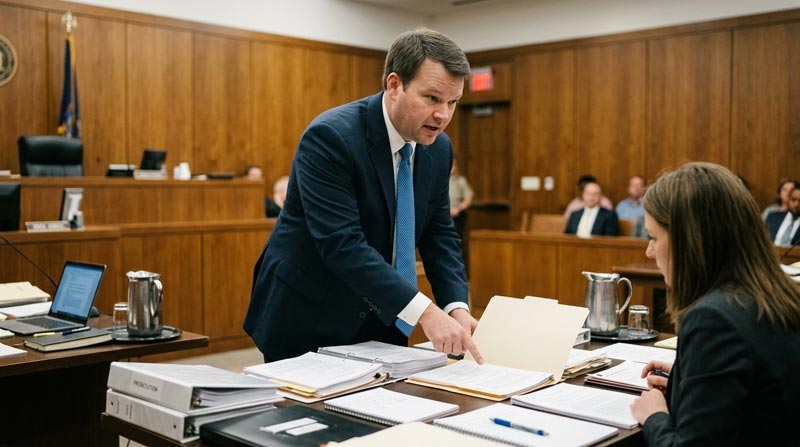
Court Dates in Travis County
After an arrest for a misdemeanor or felony in Travis County, your case may take time to move through the court system. Your bond paperwork will generally include an initial court date, but that does not necessarily mean your case will be resolved, or even formally filed, by that date. The first court setting may simply be an administrative date while prosecutors review the police reports, body-camera footage, witness statements, lab results, and other evidence and decide whether to pursue the charges.
If prosecutors decide to pursue the case, formal charges will be filed and the case will move forward. One of the next important stages is arraignment. An arraignment is the court proceeding where you are formally advised of the charge against you and enter a plea, typically not guilty at this early stage when the case is being contested. Depending on the case and whether you have an attorney, your personal appearance or a formal courtroom arraignment may not always be required.
After arraignment, additional court dates are generally scheduled while your attorney obtains and reviews the evidence, investigates the allegations, identifies weaknesses in the prosecution’s case, files appropriate motions, and negotiates with prosecutors. These court dates do not necessarily mean your case is going to trial. There may be several settings while your attorney works toward a dismissal, reduced charge, alternative resolution, or plea agreement or prepares the case for trial.
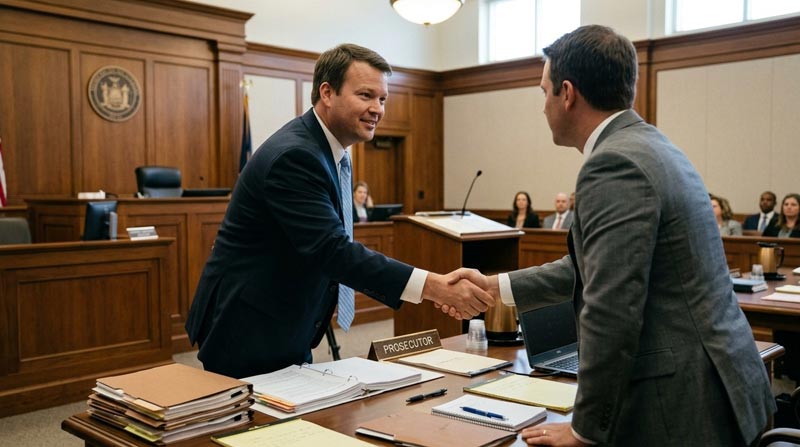
How Do You Know if a Trial Is Necessary?
A trial may become necessary when the prosecution will not dismiss or sufficiently reduce the charges and accepting a plea agreement is not in your best interests. Before making that decision, your attorney should thoroughly investigate the case, review the evidence, identify weaknesses in the prosecution’s case, explore possible defenses, file appropriate motions, and negotiate with prosecutors. If a fair resolution cannot be reached, taking the case to trial gives you the opportunity to challenge the evidence and require the prosecution to prove every element of the charge beyond a reasonable doubt.
Even when a trial date has been set, prosecutors may still agree to a favorable resolution before the trial actually begins. You should not be intimidated by the possibility of a trial. In some cases, going to trial may be the best opportunity to establish your innocence and obtain a complete acquittal, meaning you are found not guilty of the charges against you.
Can a Criminal Case Be Sealed or Expunged?
Depending on how your criminal case is resolved, you may be able to have the records of your arrest either expunged or sealed from public view. An expunction is generally the better outcome because it can result in the arrest and related records being destroyed or removed. An order of nondisclosure does not destroy the record, but it generally prevents the public from accessing it.
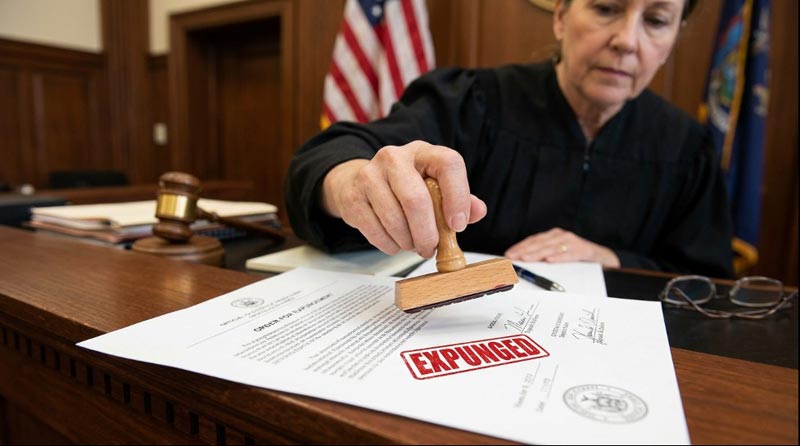
Clearing or Sealing Your Criminal Record
If your case is dismissed, you are found not guilty, or you successfully complete certain pretrial diversion, mental health court, veterans treatment court, or other qualifying programs that result in dismissal, you may be eligible for an expunction.
If you receive deferred adjudication, the case may ultimately be dismissed without a conviction, but that does not automatically erase the record. Depending on the offense and your criminal history, you may instead qualify for an order of nondisclosure that seals the record from most public view.
A reduced charge can be more complicated and really depends on the circumstances of the case. An attorney can usually review the outcome and determine whether expunction or nondisclosure may be available.
This is why the final outcome of your case matters beyond avoiding jail or reducing the immediate penalties. When negotiating a dismissal, reduction, diversion program, treatment program, or deferred adjudication, your attorney should also consider whether the resolution may allow you to eventually clear or seal your criminal record.

How to Find My Criminal Court Date?
Go to the Travis County website. Use the Docket Search tool for quick information about upcoming court settings, or the Odyssey Portal for more detailed information about your case. Enter your full name to find your next court date, courtroom number, floor, and whether you are required to appear in person. Because court dates and appearance requirements can change, check your case again the day before you are scheduled to appear. You should also confirm with your defense attorney whether your court date has been postponed or whether you actually need to appear in person.
Schedule a Free Case Evaluation Online
Preparation and Evidence Collection Are What Win Cases
At The Law Office of Ken Gibson, preparation and evidence collection are what win cases. Being better prepared than the opposing side is one of the reasons the firm has built a track record and reputation for success. When it comes to winning in the courtroom, the side that knows more about the case is more likely to win. The attorney who has prepared more, has a closer relationship with the client, and has a better grasp of the facts has a better chance of winning.
Great criminal defense lawyers do not simply defend against the prosecution’s story. They prepare their cases with precision. They conduct their own independent investigations, gather evidence the police may have overlooked, uncover weaknesses and inconsistencies, identify errors and omissions, and challenge evidence that should not be trusted or admitted.
The defense team at The Law Office of Ken Gibson carefully documents the scene of the arrest, interviews witnesses and bystanders, and combs through police reports, lab test results, body camera footage, surveillance video, court documents, bystander information, and other evidence that may help reveal what actually happened.
By questioning assumptions, identifying inconsistencies, investigating witnesses, and digging into details others may have overlooked, the defense team works to uncover the full story behind the allegations and ensure the client’s side is heard by the prosecutor, judge, and jury.
The better prepared the defense is, the better positioned the attorney is to expose weaknesses in the prosecution’s case, create reasonable doubt, and achieve the best possible outcome. Reasonable doubt means there is a real reason to question whether the person actually committed the crime. If the evidence leaves the judge or jury with a reasonable question about what happened or whether the accused is guilty, they must find the person not guilty.
Ken and his team have handled tens of thousands of criminal cases and built an extensive record of courtroom success, including hundreds of jury trials. The vast majority of cases they have defended have resulted in dismissals, acquittals, or reduced charges that helped clients avoid a criminal conviction or permanent criminal record.
Ken has built an uncompromising reputation across the legal community as a relentless trial lawyer. Known for meticulous preparation and aggressive defense strategies, he refuses to accept anything short of the best possible outcome for his clients. His no-holds-barred reputation and courtroom record routinely place him in notable, high-stakes, high-profile criminal cases featured on local and national news.
His media appearances include NBC, CBS, ABC, and Fox. Ken and his team have also been recognized by Super Lawyers.





Understanding Our Clients, Not Just the Evidence
Knowing the evidence is only part of Ken’s preparation. He wants to understand the people behind it.
Ken builds a real relationship with his clients so he can understand not only what happened, but why it happened, what they were experiencing at the time, and the circumstances surrounding the accusation. This allows him to build a story that resonates with the human beings listening to the case.
He takes the same approach with witnesses and bystanders. Understanding the person behind a statement, including their perspective, relationships, biases, motivations, and circumstances, can be just as important as understanding the statement itself.
That deeper understanding can reveal inconsistencies, motives, missing context, and evidence that might otherwise never come to light.
Have the Courage to Go Through the Storm
Right now, you may feel like you are in the middle of a storm. The attorneys at The Law Office of Ken Gibson will not tell you that what you are facing isn’t serious or that you shouldn’t be afraid. But they will remind you of something important.
Storms pass.
Think about what buffalo do when a storm approaches. Instead of running away from it, they turn toward the storm and move directly through it. By facing it head-on rather than trying to outrun it, they spend less time in the worst of the weather.
There is something we can learn from that.
Have the courage to face what is in front of you.
You do not have to figure everything out today. You do not have to pretend you are not afraid. Courage does not mean the absence of fear. It means continuing to move forward despite it.
Sometimes, the fastest way out of a storm is straight through it. And you do not have to go through it alone.
Take More From This Than It Takes From You
Getting through the storm is only part of the journey.
One day, you may be able to look back at one of the hardest experiences of your life and realize that you took more from it than it took from you.
Do not waste that opportunity. Learn from this, let it change you for the better, and let it strengthen you for the prosperous future you deserve.
The goal is to reach the other side knowing that this experience did not define you or own you. You faced it. You stood up for yourself. And when it was over, you walked away stronger and wiser, with a positive outcome that allowed you to create the life you always deserved.
Hire the Right Criminal Defense Attorney
Get the best criminal defense attorney you can to protect you. Find an attorney who has the passion and experience to fight for the best possible outcome for your charges.
You should not have to go through this storm alone, and this is not the time to have someone simply going through the motions.
Your Attorney Should Conduct an Independent Investigation
You want an attorney who will conduct an independent investigation instead of simply accepting the police report as the truth.
Your attorney should know the evidence better than anyone else involved in your case and be better prepared than the police officer who arrested you and the prosecution trying to punish you.
That means questioning assumptions, finding weaknesses, uncovering evidence, identifying what may have been overlooked, and understanding exactly what happened.
Your Story Needs to Be Presented Masterfully
Your attorney, your evidence, and your side of the story need to be presented masterfully.
The goal is not simply for a judge or jury to hear what happened. They need to understand what happened.
They need to understand you as a human being, the circumstances you were facing, and the causes and conditions that led to this moment in your life. They need the complete picture, not just the version contained in a police report or presented by the prosecution.
When your story is told effectively, a judge or jury can see beyond the accusation and understand the person standing before them. They can have the context, compassion, and discernment to recognize that what happened may be far more complicated than the criminal charge makes it appear.
And when the circumstances support it, they can understand something equally important: simply punishing you may not be the answer.
Affordable Payment Plans & Free Legal Consultations
The Law Office of Ken Gibson is interested in one thing: achieving the best possible outcome for your case and doing so for a fee that is fair and reasonable.
Defending a criminal case properly can require many hours of investigation, evidence review, legal research, negotiations, court appearances, and trial preparation. The more serious or complicated the charge, the more time, money, and resources an attorney may need to investigate the case, uncover valuable evidence, and be better prepared in court.
A retainer fee is the initial payment required to hire your attorney and begin representation. It generally covers the attorney’s representation through the pretrial stages of the case.
We also understand that not everyone has immediate access to the money needed to cover legal fees at the drop of a dime. That is why the firm offers some of the most flexible payment plans possible, allowing you to get the experienced legal representation you need today while spreading the remaining cost into more manageable payments over time.
This means you can hire a defense attorney and have someone fighting to protect you today while paying the remaining balance over time. When your freedom, record, career, reputation, and future may be at stake, hiring the right attorney is an investment in yourself and your future that you may look back on and be thankful you made.
Types of Criminal Cases We Defend
The Law Office of Ken Gibson represents individuals facing everything from misdemeanor charges to the most serious felony offenses in Texas. These include:
DWI and Intoxication Crimes
Driving While Intoxicated (DWI), DWI with a BAC of .15 or higher, DWI with a child passenger, second-offense DWI, felony DWI, intoxication assault, intoxication manslaughter, boating while intoxicated, flying while intoxicated, assembling or operating an amusement ride while intoxicated, underage DUI, and public intoxication.
Family Violence and Domestic Assault
Assault family violence, assault family violence causing bodily injury, assault family violence by strangulation or suffocation, aggravated assault family violence, aggravated assault family violence with a deadly weapon, continuous violence against the family, violation of certain court orders or conditions of bond, repeated violation of certain court orders or conditions of bond, interference with an emergency request for assistance, stalking, and harassment.
Assault and Violent Crimes
Assault causing bodily injury, assault by threat, assault by offensive or provocative contact, aggravated assault, aggravated assault with a deadly weapon, deadly conduct, terroristic threat, injury to a child, injury to an elderly individual, injury to a disabled individual, unlawful restraint, kidnapping, aggravated kidnapping, robbery, aggravated robbery, murder, capital murder, manslaughter, criminally negligent homicide, and attempted murder.
Theft and Property Crimes
Theft, shoplifting, theft of service, burglary, burglary of a habitation, burglary of a building, burglary of a vehicle, criminal trespass, criminal mischief, arson, unauthorized use of a motor vehicle, motor vehicle theft, organized retail theft, cargo theft, theft of trade secrets, mail theft, and receiving or possessing stolen property.
Drug and Controlled Substance Offenses
Possession of a controlled substance, possession of marijuana, manufacture or delivery of a controlled substance, possession with intent to deliver a controlled substance, delivery of marijuana, manufacture or delivery of a controlled substance causing death or serious bodily injury, possession or delivery of drug paraphernalia, prescription drug fraud, diversion of controlled substances, and drug offenses in drug-free zones.
Evading, Fleeing, and Police-Related Offenses
Fleeing or attempting to elude a police officer, evading arrest or detention, evading arrest or detention with a motor vehicle, evading arrest or detention with a watercraft, resisting arrest, search, or transportation, failure to identify, interference with public duties, hindering apprehension or prosecution, escape, permitting or facilitating escape, false report to a peace officer, and impersonating a public servant.
Weapons and Firearm Offenses
Unlawful carrying of weapons, unlawful possession of a firearm, unlawful possession of a firearm by a felon, weapons in prohibited places, prohibited weapons, unlawful transfer of certain weapons, making a firearm accessible to a child, and unlawful discharge of a firearm.
Crimes Involving Courts and the Justice System
Bail jumping and failure to appear, tampering with or fabricating physical evidence, tampering with a witness, obstruction or retaliation, perjury, aggravated perjury, false alarm or report, and bribery.
Traffic and Motor Vehicle Offenses
Reckless driving, racing on a highway, reckless driving exhibition, driving while license invalid, failure to stop and render aid, and leaving the scene of an accident.
Fraud and White-Collar Crimes
Fraud, credit card fraud, forgery, fraudulent use or possession of identifying information, identity theft, and computer crimes.
Prostitution and Human Trafficking Offenses
Prostitution, solicitation of prostitution, promotion of prostitution, aggravated promotion of prostitution, compelling prostitution, trafficking of persons, and continuous trafficking of persons.
Organized Crime and Conspiracy Offenses
Engaging in organized criminal activity, directing activities of certain criminal street gangs, criminal conspiracy, criminal solicitation, criminal solicitation of a minor, and money laundering.
Juvenile Cases
Juvenile assault cases, juvenile family violence cases, juvenile drug cases, juvenile theft and shoplifting cases, juvenile burglary cases, juvenile weapons cases, juvenile sex offense cases, juvenile DWI and DUI cases, juvenile robbery cases, juvenile felony cases, and juvenile cases involving certification as an adult.
Public Order and Decency Offenses
Disorderly conduct, riot, obstructing a highway or other passageway, and disrupting a meeting or procession.
Sex Crimes
Indecent exposure and public lewdness.
There Is a Way Through This
At the Law Office of Ken Gibson, we believe the justice system works best when you know how to use it to your advantage, tell your side of the story, and fight for the best possible outcome.
The problem is that the justice system is broken, very broken, and too often, people accused of crimes feel as though they are guilty until proven innocent instead of innocent until proven guilty.
The Broken System of Justice
The criminal justice system is broken. Prosecutors are trying to secure as many convictions as possible, public defenders are overwhelmed, and crowded courts are under constant pressure to keep cases moving. Caught in the middle is the person accused, whose freedom, job, family, reputation, and future may all be at stake.
Even innocent people can find themselves pressured to accept plea deals because they cannot afford to sit in jail, miss work, lose their job, or spend months fighting an accusation. Evidence can be incomplete, witnesses can be wrong, and police reports may tell only one side of the story. Important facts can be overlooked, yet the system keeps moving forward.
Having an attorney with the time, resources, and determination to investigate what actually happened, uncover evidence others may have missed, challenge the prosecution’s case, and fight for you can make an enormous difference.
Schedule a Free Legal Case Evaluation
The Law Office of Ken Gibson offers free, no-obligation legal case evaluations that can last up to an hour, giving you the opportunity to speak directly with the legal team, ask questions, and receive legal advice before you ever decide whether to hire us.
During your consultation, the legal team will listen to what happened, ask questions about your arrest or charges, and help you understand what you are facing. You will have the opportunity to ask questions and get straightforward answers about your case, your rights, and your legal options.
The legal team will also provide insight into what you should do immediately to protect yourself, sidestep unnecessary consequences, and avoid mistakes that could make your situation more difficult. Based on what the legal team learns, we can begin identifying potential defenses and developing an initial strategy for addressing the charges and working toward the best possible outcome.
Everything you discuss with the firm’s office is confidential, so you can speak openly about what happened and give us the information the legal team needs to understand the complete picture.
Following the evaluation, the legal team will explain how the firm would approach your defense and provide you with a quote for our legal services.

Leave Your Consultation With a Clear Path Forward
There is no obligation to hire us or pay anything for this consultation. Even if you ultimately cannot afford to hire our firm, we may be able to refer you to another skilled criminal defense attorney who can help.
Most people walk away from their consultation feeling more educated, empowered, and relieved than when they came in. Once they understand their options, they often discover that their situation is not as hopeless as it initially seemed and that there may be solutions they had never considered. Knowing that there is a strategy and a path forward can provide tremendous peace of mind and, quite literally, help you sleep better at night.