

Austin DWI Lawyer
A Track Record of Having Charges Reduced and Dismissed
Being arrested does not mean a person will be convicted, sentenced to jail, or lose everything they have. An arrest is an event. It is not a verdict, and it does not have to define what happens next. A strong criminal defense attorney can challenge the case against them, working to have the charges dismissed or reduced, or to secure an acquittal, helping them avoid a conviction and permanent criminal record.
We Believe In
Having Your Charges Dismissed or Reduced
Our firm has a winning record of getting charges reduced and cases dismissed.
Empowering & Educating You
We empower you with helpful and useful information that will give you more options and make informed decisions.
Payment Plans & Free Evaluations
We offer affordable and convenient payment plans.

A History of Winning
A criminal accusation can bring an overwhelming amount of uncertainty, stress, fear, and anxiety. In those first days, the mind can race ahead, imagining jail, a damaged reputation, a lost career, and a future that has been permanently changed. But what someone fears might happen is not the same as what will happen. Today’s circumstances do not have to become tomorrow’s reality.
The defense team at The Law Office of Ken Gibson works to get clients to the other side of uncertainty by fighting for the best possible legal outcome for each client they defend. Their reputation is built on winning what seem like unwinnable cases.
The defense team has achieved favorable outcomes for thousands of satisfied clients, helping them restore their lives, their dignity, and their futures, and move forward as if the arrest never happened, allowing them to have the life they deserve.

Affordable Payment Plans & Free Legal Consultations
The right attorney can make or break a case, and cost should not prevent you from getting the experienced representation you deserve to achieve the best possible outcome and regain your life. That is why The Law Office of Ken Gibson offers flexible payment plans designed to fit your budget, allowing you to make affordable payments over time.
It all starts with a free, no-obligation legal case evaluation. You can meet with our skilled legal team for up to an hour to discuss the charges against you and begin developing a strategy for your defense. After this consultation, most people realize they have options they never knew existed and that their situation may not be as hopeless as it first seemed. Understanding those options can provide relief and a path forward, allowing you to get a good night’s sleep knowing that you have a team working to protect you.
Reviews
Sample Google and Facebook Reviews:
If you want an attorney that will go the extra mile, you should get Ken on your side.
M.M.
Ken went above and beyond, dealing with both me and my legal matter, to get a resolution that allows me to live my life to the fullest.
A.G.
Not only has Ken has helped me, he’s also helped friends that I have sent his way. He’s a great guy that will work hard to get you the best result.
J.P.
Dealing with a DWI charge is a headache, but Ken and Michelle made it as painless as possible. On my initial consultation with Ken, he told me he’d get my case dismissed, and that’s exactly what he did! The office was excellent at keeping me informed every step of the way.
E.S.

We Empower and Educate Our Clients
We want our clients to make educated, informed decisions about their cases, and we treat them as active participants in their own defense. As such, we empower our clients with education and knowledge about their case, so they can have their side of the story heard in court.
Testimonials
DWI Defense
Criminal Defense
Jail Release
On-Call 24-Hours
Your Side of the Story Can Set You Free
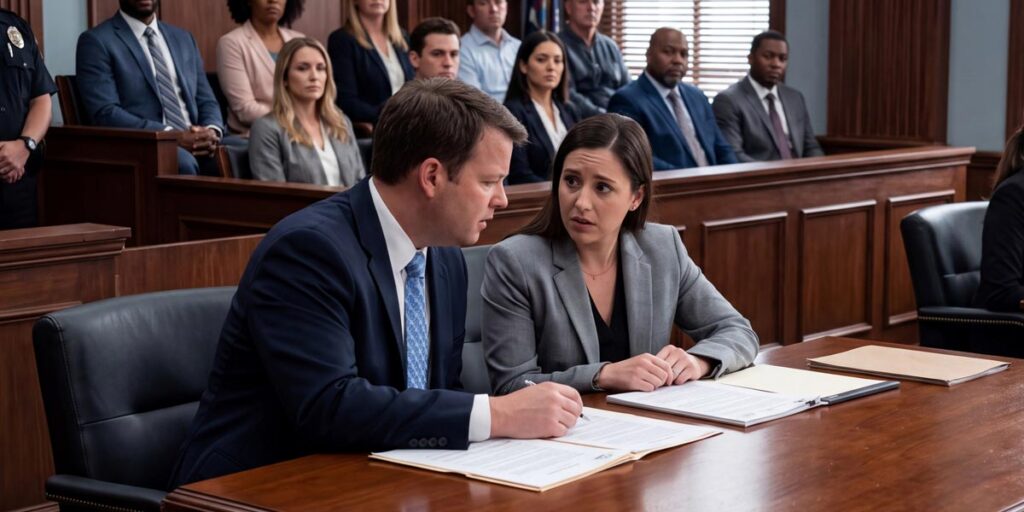
The attorneys at The Law Office of Ken Gibson know that a true story, told well and backed by evidence, can change the course of any criminal case. Law enforcement and prosecutors will tell their side of the story. The defense team works to make the client’s story more compelling, more persuasive, and backed by stronger evidence.
From the beginning, the defense team conducts an independent investigation, interviews witnesses, examines the evidence, and uncovers facts others may have overlooked. The attorneys look for evidence that can prove a client’s innocence, expose weaknesses and inconsistencies in the prosecution’s case, and challenge the story being told against them.
In criminal cases, the stronger narrative backed by stronger evidence wins time and time again. The attorneys at The Law Office of Ken Gibson work to uncover the facts, build the client’s story, and present it in the most convincing way possible to achieve the outcomes clients expect.
Schedule a Free Case Evaluation Online
 Arrested for DWI? Here’s What You Need to Know
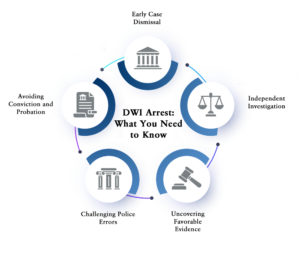
The best possible outcome in a DWI case is to defeat the charge altogether—not simply negotiate a lesser punishment. While other law firms want to instill fear, we instill hope that you will get out of this with the best possible outcome. At The Law Office of Ken Gibson, the priority is to seek dismissal of the case as early as possible by presenting favorable evidence, exposing weaknesses in the prosecution’s case, and challenging evidence obtained unlawfully or through inaccurate procedures.
This proactive defense strategy seeks to resolve cases before clients endure the expense, uncertainty, and potential consequences of prolonged criminal proceedings. When the facts and law support it, a DWI charge may be erased without requiring probation, diversion, or a guilty plea.
The secret to this is launching a full-scale independent investigation right after the arrest. This is a comprehensive private investigation where we revisit the scene of the arrest, obtain your medical history, and look at your sleep, stress, and emotional factors leading up to the arrest. We document an entire narrative from the time you woke up until the arrest to find even the smallest details.
We interview witnesses and bystanders, examine police reports, review body-camera and dashcam footage, analyze laboratory reports, identify police missteps, and document everything.
Independent Investigation: Uncovering Medical Conditions and Police Testing Errors
Imagine a driver who is arrested for DWI after an officer observes bloodshot eyes, poor balance, and difficulty performing field sobriety tests.
The police report makes the case appear straightforward. However, an independent investigation reveals that the driver had slept only three hours the previous night, was experiencing significant emotional stress, and had a medical condition affecting balance.
When the defense team revisits the arrest scene, it discovers that the field sobriety tests were conducted on uneven pavement under poor lighting conditions. Body-camera footage also shows that the officer failed to follow certain standardized testing procedures.
By documenting everything that happened from the time the driver woke up until the moment of arrest, the investigation uncovers evidence that may explain the officer’s observations without intoxication being the cause.
What initially appeared to be a strong DWI case may now contain significant weaknesses that could support suppression of evidence, dismissal, or a more favorable resolution.
But what happens when a case is more complicated and an outright dismissal is not immediately achievable?
Here is some insider legal knowledge that may provide considerable peace of mind: A DWI arrest does not automatically mean a criminal conviction or a permanently damaged future.
Texas law recognizes that a criminal conviction can have devastating consequences for someone’s employment, professional licensing, reputation, financial stability, and personal life. Fortunately, several legal alternatives provide opportunities for accountability, rehabilitation, and second chances.
Each option carries distinct benefits, eligibility requirements, and potential consequences. Understanding these differences is essential before making a decision that could affect your future.
Early Attorney Intervention
What does early attorney intervention mean?
Early attorney intervention means hiring a defense attorney to begin fighting your DWI charge immediately, rather than waiting for your first court appearance or for prosecutors to build their case against you.
Your attorney may investigate what happened, uncover evidence the police overlooked, identify mistakes made during the arrest, and approach prosecutors with reasons why your case should be dismissed or the charges reduced.
Think of it as trying to stop the case before it gains momentum. In some circumstances, an attorney may be able to persuade prosecutors not to file charges at all.
The goal is to get the DWI charge thrown out as early as possible, without having to plead guilty, complete probation, or participate in a court-supervised program.
An experienced defense attorney may approach prosecutors before formal charges are filed or during the early stages of prosecution to present favorable evidence, identify legal weaknesses, and seek dismissal or reduced charges.
For example, a first-time DWI case involving no accident or injuries may include an unlawful traffic stop, improperly administered field sobriety tests, or questionable blood or breath evidence. Identifying these issues early may persuade prosecutors to reconsider pursuing the charge.
Challenging an Unlawful Traffic Stop Before Prosecution
A nurse is arrested for DWI after driving home from a 14-hour hospital shift. The arresting officer reports that she had bloodshot eyes, appeared confused, and performed poorly on field sobriety tests.
Her defense attorney immediately launches an independent investigation and discovers that the nurse was suffering from extreme sleep deprivation. The attorney also obtains dashcam footage revealing that the officer’s stated reason for stopping her vehicle may not have been legally justified.
Before the case progresses further, the attorney presents this evidence to prosecutors and challenges both the legality of the traffic stop and the reliability of the officer’s conclusions.
Rather than waiting months for trial, the attorney seeks to persuade prosecutors that the case should be dismissed or the charges reduced based on the weaknesses uncovered.
The advantage: Potential dismissal or reduction of charges without a conviction or lengthy supervision.
The disadvantage: Prosecutors are not obligated to dismiss or reduce charges, even when the defense identifies weaknesses.
Pretrial Diversion
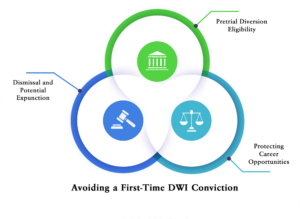
Pretrial diversion is a program that may give certain eligible individuals an opportunity to have their criminal charges dismissed by completing specific requirements instead of proceeding through a traditional criminal prosecution.
Think of it as an agreement with prosecutors: If you qualify for the program, follow the rules, and successfully complete everything required, the prosecution may agree to dismiss your charge.
Depending on the program, these requirements might include alcohol education classes, counseling, community service, regular testing, or other conditions.
The important difference is that successful completion of a qualifying pretrial diversion program may allow you to avoid a criminal conviction altogether.
In certain circumstances, you may also become eligible to have the arrest record expunged, meaning the record can be removed from public criminal history records through a separate legal process.
However, pretrial diversion is not automatically available for DWI charges, and eligibility depends on the policies of the prosecutor’s office and the circumstances of your case.
Some defendants may qualify for diversion or alternative resolution programs, depending on local availability, eligibility requirements, and prosecutorial policies.
For example, an individual facing a first-time DWI without aggravating circumstances may be considered for an available program requiring alcohol education, counseling, community service, or ignition interlock monitoring.
Successful completion of a qualifying program may lead to dismissal and potential eligibility for expunction.
 Helping a First-Time DWI Defendant Avoid a Criminal Conviction
A 25-year-old college graduate is arrested for a first-time DWI after attending a birthday celebration. There was no accident, nobody was injured, and the individual has no previous criminal history.
The graduate recently accepted a position with a major company and is concerned that a criminal conviction could jeopardize the job offer and future career opportunities.
After reviewing the evidence, the defense attorney determines that the client may qualify for an available pretrial diversion program.
The attorney presents the client’s background, employment history, lack of criminal record, and willingness to complete alcohol education and other requirements.
If prosecutors approve participation, the client may be able to complete the program and obtain a dismissal without a criminal conviction.
Depending on the circumstances and applicable law, the client may also become eligible to seek expunction of the arrest record.
The advantage: An opportunity to avoid a criminal conviction and, in some cases, clear the arrest record.
The disadvantage: DWI diversion opportunities are limited, program requirements can be costly and demanding, and failure to complete them may result in prosecution.
Deferred Adjudication
Deferred adjudication is a legal arrangement in which you plead guilty or no contest, but the judge postpones formally finding you guilty and placing a conviction on your record.
Instead, the judge gives you an opportunity to complete a period of court supervision, commonly called probation, while following specific conditions.
These conditions may include alcohol education, community service, regular reporting, ignition interlock requirements, and avoiding additional arrests.
If you successfully complete everything the court requires, the case is generally dismissed without a formal conviction.
In simple terms, the court gives you an opportunity to avoid a formal conviction by successfully completing probation-like supervision.
However, deferred adjudication is not the same as having your DWI charge erased. You must enter a plea, the arrest and court records may remain accessible, and Texas law may still treat the offense as a prior DWI for certain purposes.
Some individuals may later qualify for an order of nondisclosure, which is a court order restricting public access to certain criminal records. This may help prevent the covered record from appearing in ordinary public background searches, although law enforcement, licensing boards, and other authorized agencies may still have access.
Deferred adjudication is available only for certain qualifying DWI cases.
Texas law permits deferred adjudication for certain eligible DWI offenses. Rather than entering a formal conviction, the court places the defendant under supervision while postponing a finding of guilt.
For example, someone charged with a qualifying first-time DWI involving a blood alcohol concentration below 0.15 may be eligible to complete community supervision, alcohol education, testing, and other court-ordered requirements.
Successful completion generally results in dismissal of the proceedings without a formal conviction. Depending on eligibility, the individual may also obtain an order of nondisclosure, which restricts public access to certain criminal records.
Protecting a Professional Career Without a Formal DWI Conviction
A 35-year-old accountant is arrested for a first-time DWI after leaving a restaurant. The reported blood alcohol concentration is 0.11, and there was no accident or injury.
The accountant is concerned that a DWI conviction could affect employment opportunities, professional advancement, and the ability to pass background checks.
After investigating the case, the defense attorney determines that deferred adjudication may be a legally available alternative if dismissal cannot be achieved.
The attorney negotiates an agreement under which the accountant enters the required plea and completes court-ordered supervision, alcohol education, and any other applicable conditions.
If the accountant successfully completes deferred adjudication, the proceedings are generally dismissed without a formal conviction.
If eligible, the accountant may also obtain an order of nondisclosure, which restricts public access to certain records and may permit the individual to avoid disclosing the covered matter on some employment applications.
However, the record is not automatically erased, certain agencies and licensing authorities may still have access, and the offense may carry consequences if another DWI occurs.
The advantage: Avoiding a formal conviction and potentially limiting the visibility of the criminal record.
The disadvantage: The record is not automatically erased, supervision can be restrictive, and the offense may still be treated as a prior DWI for certain purposes under Texas law.
 Specialty Courts
What is a DWI specialty court?
A DWI specialty court is a special court program designed to help eligible individuals address alcohol-related problems while being closely supervised by a judge.
Unlike a traditional court process that primarily focuses on determining guilt and imposing punishment, a specialty court combines treatment, supervision, and accountability.
Participants may be required to attend alcohol treatment, meet regularly with counselors, submit to alcohol testing, attend frequent court hearings, and demonstrate that they are making progress.
Think of it as a structured rehabilitation program overseen by the court.
The purpose is to address the underlying problems that may have contributed to the DWI arrest and reduce the likelihood of another offense.
These programs may be particularly relevant for people facing repeat DWI charges or struggling with alcohol dependency.
Depending on the specific program and case, successful participation may lead to more favorable sentencing or other legally available benefits. However, it does not necessarily mean the DWI charge or conviction will disappear.
DWI specialty courts focus on structured treatment, accountability, and supervision for qualifying individuals, particularly those facing repeat offenses or alcohol dependency.
For example, someone charged with a second DWI who struggles with alcohol dependency may qualify for a program involving counseling, treatment, regular testing, and ongoing judicial monitoring.
These courts seek to address underlying problems while reducing the likelihood of future offenses.
Addressing Alcohol Dependency After a Second DWI
A 45-year-old business owner is arrested for a second DWI. The individual has struggled with alcohol dependency for several years, and another conviction could have serious consequences for the business, family, and financial stability.
Rather than simply accepting a conventional sentencing arrangement, the defense attorney investigates whether the client qualifies for a specialty DWI court.
The attorney presents evidence of the client’s willingness to seek treatment, family support, employment responsibilities, and commitment to addressing the underlying alcohol problem.
If accepted into an appropriate program, the business owner may participate in counseling, treatment, regular alcohol testing, and ongoing judicial supervision.
Successful completion may provide access to a more favorable sentencing outcome, depending on the program and the circumstances of the case.
Although the DWI charge may not disappear, the program may offer an opportunity to address the underlying problem while reducing the risk of future offenses.
The advantage: Access to structured rehabilitation and the possibility of more favorable sentencing outcomes.
The disadvantage: Participation requires substantial time and strict compliance, and successful completion does not necessarily eliminate a conviction.
Understanding Dismissal, Expunction, and Nondisclosure
Because these terms are often confused, it is important to understand what each one means.
Dismissal: The criminal charge is dropped.
A dismissal means the prosecution is no longer proceeding with that charge. You are not convicted of the dismissed charge, but the arrest and court records may still exist.
Expunction: Qualifying criminal records are legally removed.
An expunction is a court-ordered process that generally requires covered agencies to destroy or return qualifying arrest and criminal case records. For eligible individuals, this is one of the most powerful forms of record clearing available under Texas law.
Order of nondisclosure: The record is hidden from most public access, but not erased.
An order of nondisclosure restricts public disclosure of certain criminal records. It can provide meaningful protection when applying for jobs or housing, but the records remain available to law enforcement and certain authorized agencies, including some professional licensing authorities.
The bottom line: Avoiding a conviction, getting a charge dismissed, restricting access to a record, and having a record expunged are four different legal outcomes. Understanding these differences can help you avoid accepting an arrangement that carries more long-term consequences than you realize.
Why Having the Right DWI Defense Attorney Matters
While these alternatives may offer valuable opportunities, they should never be confused with defeating a DWI charge altogether.
Whenever legally achievable, a complete dismissal—or reduction to a substantially less serious offense, potentially a minor traffic-related offense where legally permissible—is generally preferable to accepting probation, diversion, or deferred adjudication.
Even resolutions that avoid a formal conviction can carry financial obligations, supervision requirements, lingering criminal records, or consequences for future offenses.
The Difference Between Accepting Probation and Defeating a DWI Charge
Imagine two individuals arrested for DWI under similar circumstances.
The first individual decides to accept deferred adjudication without having an attorney conduct an extensive independent investigation. Although the individual successfully completes supervision and avoids a formal conviction, the arrest record is not automatically erased, and certain legal consequences may remain.
The second individual hires an experienced DWI defense attorney immediately after the arrest.
The attorney revisits the arrest scene, interviews witnesses, examines body-camera footage, reviews medical records, and scrutinizes the laboratory evidence.
During the investigation, the attorney discovers that the officer may have lacked reasonable suspicion for the traffic stop and that important evidence may have been obtained in violation of constitutional protections.
The attorney files a motion to suppress the evidence. If the court grants the motion and the prosecution lacks sufficient remaining evidence, the case may be dismissed.
Depending on the circumstances, the second individual may then qualify to seek expunction of the arrest record.
Both individuals may avoid a formal conviction, but their long-term outcomes could be very different.
However, knowing these alternatives exist does not mean you should walk into court alone and attempt to negotiate them yourself.
Effective DWI defense requires far more than requesting leniency. It involves understanding constitutional protections, challenging the admissibility and reliability of evidence, identifying procedural violations, and knowing when and how to negotiate with prosecutors.
An experienced defense attorney’s courtroom credibility, knowledge of local practices, and established professional relationships can help facilitate meaningful negotiations. Ultimately, however, the strength of the legal arguments and evidence determines which outcomes are realistically achievable.
At The Law Office of Ken Gibson, the first priority is to examine every legally supportable opportunity to defeat the DWI charge. This may involve presenting evidence that supports the defense, challenging unreliable chemical testing, exposing constitutional violations, or filing motions to suppress unlawfully obtained evidence.
When dismissal is not possible, the focus shifts to evaluating available alternatives and pursuing the most favorable resolution permitted by law.
The goal is not simply to get you through a DWI case. It is to protect your career, reputation, freedom, and future.
One mistake does not have to define the rest of your life. With the right legal representation, a comprehensive independent investigation, and an aggressive defense strategy, you may have more options than you realize.
 DWI FAQs
How Does Travis County Treat DWI Offenders?
Travis County recognizes that people are more than their mistakes and that punishment alone does not always lead to meaningful change. While DWI is a serious offense requiring accountability, the county offers alternatives that emphasize rehabilitation, personal growth, and second chances. The Law Office of Ken Gibson works closely with prosecutors and judges to pursue outcomes that prioritize rehabilitation over unnecessary punishment while protecting clients’ futures.
Depending on the circumstances of the case and individual eligibility, these alternatives may include diversion programs, deferred adjudication, DWI Court, Drug Court, probation, substance abuse counseling, alcohol education, and structured treatment programs. Some options can lead to a complete dismissal and potential expunction, while others may allow individuals to avoid a final conviction, qualify for record sealing, or receive treatment instead of incarceration.
People should be held accountable for their actions, but they should not be permanently defined by their worst mistakes. True justice should also leave room for compassion, rehabilitation, personal growth, and redemption.
What Is the Likelihood My Case Will End With a Conviction for DWI?
If you choose to proceed without an attorney, unfortunately, your chances of being convicted may be significantly higher. However, hiring a highly experienced DWI defense attorney with a proven track record of wins can dramatically improve your chances of having the charges dismissed or obtaining a favorable outcome without a conviction. Although requesting a public defender may seem like a logical choice, public defenders often carry heavy caseloads that can limit the time and resources available to conduct the kind of comprehensive, independent investigation needed to uncover weaknesses in the prosecution’s case, pursue a complete dismissal of your charges, and have your arrest record expunged.
Is DWI Considered a Felony in the State of Texas?
Most DWI arrests in Texas involve misdemeanor charges rather than felonies, but that doesn’t mean they are minor offenses. Texas divides misdemeanors into three categories:
- Class C Misdemeanor: The least serious classification, generally involving fine-only offenses. For example, a minor traffic violation may be classified as a Class C misdemeanor. These offenses are generally viewed as less serious by the law, although they can still appear on certain records and background checks.
- Class B Misdemeanor: A more serious criminal offense that can result in a permanent criminal record. For example, if you’re arrested for your first DWI with a blood alcohol concentration (BAC) of 0.10, you would generally face a Class B misdemeanor. Unlike an ordinary traffic ticket, a conviction becomes part of your criminal history and may affect employment, housing, and future opportunities.
- Class A Misdemeanor: The most serious misdemeanor classification, carrying greater legal consequences and the potential for a permanent criminal record. For example, if you’re arrested for your first DWI with a BAC of 0.16, the charge is elevated to a Class A misdemeanor. A second DWI is also generally classified as a Class A misdemeanor, even if your BAC is below 0.15.
When Does a DWI Become a Felony in Texas?
A DWI generally becomes a third-degree felony when you have two qualifying prior DWI convictions. For example, if you were convicted of DWI in 2005 and again in 2015, a third DWI arrest in 2026 could result in felony charges, regardless of how much time has passed since your previous convictions.
However, even a first DWI can result in felony charges under certain circumstances. For example, driving while intoxicated with a child under 15 in the vehicle can result in a state jail felony. If an intoxicated driver causes an accident resulting in serious bodily injury or death, they may face felony intoxication assault or intoxication manslaughter charges.
Whether your DWI is classified as a misdemeanor or felony, a conviction can leave a lasting mark on your criminal record, affecting employment, professional licenses, housing, and future opportunities. That’s why it’s important to take every DWI charge seriously and explore your legal defense options before accepting a conviction.
What Potential Jail Time Does a DWI Conviction Carry in Texas?
First DWI — 72 Hours to 180 Days in Jail
For a first DWI, Texas law generally allows 72 hours to 180 days in jail. But that doesn’t mean you’re necessarily going back to jail. For many first-time offenders, an experienced attorney may be able to negotiate probation, credit for time served, community service, alcohol education, or other alternatives to additional jail time. The goal is to keep you out of jail and minimize the impact on your future.
Second DWI — 30 Days to One Year in Jail
A second DWI carries 30 days to one year in jail, but that doesn’t mean you’ll serve the full sentence. We may be able to negotiate probation, treatment, counseling, or other alternatives to extended incarceration. Texas generally requires at least 72 hours of confinement as a condition of community supervision for a second DWI, but an attorney can explore available legal options to minimize the time you spend behind bars.
Third DWI — Two to Ten Years in Prison
A third DWI is generally a felony carrying two to ten years in prison. That’s serious, but prison isn’t necessarily inevitable, especially when substance abuse or addiction is a contributing factor. We can explore felony probation, residential treatment, rehabilitation programs, and other alternatives when you’re eligible. Even when probation is granted, Texas generally requires at least 10 days of confinement. The right defense strategy can make a significant difference in whether you face prison or qualify for an alternative that allows you to rebuild your life.
How Much Could a DWI Cost You in Texas?
A DWI arrest in Texas can trigger a cascade of unexpected fees, fines, and financial consequences that quickly add up to tens of thousands of dollars.
These expenses may include attorney fees, bail bonds, towing fees, vehicle impound fees, ALR hearing fees, ALR legal fees, driver’s license suspension, occupational driver’s license fees, court fines, court costs, probation supervision fees, probation administrative fees, ignition interlock device installation and monthly monitoring fees, alcohol monitoring fees, drug and alcohol testing fees, DWI education classes, alcohol counseling fees, MADD victim impact panel fees, community service fees, driver’s license reinstatement fees, criminal record consequences, and expunction or record sealing fees.
Hiring an experienced DWI defense attorney who can get your case dismissed could potentially save you thousands, or even tens of thousands, of dollars by helping you avoid many of the fines, administrative fees, court-imposed penalties, and other expenses associated with a DWI conviction.
What Happens If I Plead Guilty to DWI in Texas?
Pleading guilty to DWI in Texas may seem like the easiest solution, but the consequences can be costly, devastating, and lifelong, including a permanent criminal record, fines, probation, license suspension, and damage to your career and reputation. Even if you blew over the legal limit, your DWI case can still be challenged and beaten. At The Law Office of Ken Gibson, we don’t take cases simply to help clients plead guilty. Our approach is to plead not guilty, conduct an aggressive independent investigation, expose weaknesses in the prosecution’s evidence, and fight for an outcome that leaves you with no criminal conviction and no permanent arrest record.
What Happens If I Plead No Contest (Nolo Contendere) to DWI in Texas?
Pleading no contest (nolo contendere) to DWI in Texas generally carries the same consequences as pleading guilty, including a criminal conviction, fines, probation, possible driver’s license suspension, and a potentially permanent criminal record. However, certain first-time DWI offenders may qualify for deferred adjudication, which can result in dismissal without a final conviction. Even then, the arrest and court records remain, and eligible individuals generally must wait two years after completing deferred adjudication before petitioning to have their records sealed. Certain qualifying DWI convictions may also be eligible for sealing after two to five years, but a conviction generally cannot be expunged.
Can My Texas DWI Record Be Sealed or Expunged if I Plead Guilty, Not Guilty, or No Contest?
In Texas, record sealing means your DWI record is hidden from the general public and most employers, although law enforcement and certain government agencies can still access it. Expungement means your DWI arrest and related records are legally erased, generally allowing you to deny that the arrest ever occurred. Pleading guilty or no contest (nolo contendere) to DWI generally results in a criminal conviction that cannot be expunged, although certain first-time offenders may qualify to have their records sealed after a waiting period. Pleading not guilty allows you to challenge the charges, and if you are found not guilty or your case is dismissed, you may qualify for an expungement. Eligibility depends on how your case is ultimately resolved.
How Long Can I Expect My DWI Case to Take if I Challenge It?
There are multiple factors unique to your case that could make your DWI case take longer or shorter to resolve. Generally, however, DWI cases take anywhere from 5 months to a year. Often, by the time your trial date approaches, your attorney will have assembled a treasure trove of evidence through an independent investigation, exposing weaknesses in the prosecution’s case. Presenting this evidence to prosecutors tends to make them lean in favor of a non-conviction disposition rather than actually going to trial.
I Refused the Breath Test – What Can I Expect?
In Texas, drivers are subject to the state’s implied-consent law. What that means is, by virtue of receiving a driver’s license, you agree to tests of your blood, breath or urine by law enforcement if they suspect that you have been driving while intoxicated. Essentially, what it says is that you have the right to refuse this test, but by doing so you trigger an automatic suspension of your license.
In this scenario, the arresting officer asked you to submit to a chemical test to determine your degree of intoxication, and you refused, which is your right. At that point, you would have been given a 180-day administrative suspension of your license. This suspension, however, can be challenged.
 How Do I Get My License Back?
A DWI arrest can create two separate obstacles. First, the State of Texas can try to take away your driver’s license and your ability to get to work and provide for yourself and your family. Second, prosecutors can try to convict you of DWI, leaving a permanent blemish on your criminal record.
In this day and age, most people cannot afford to lose their ability to drive or have a DWI conviction follow them around for years. The good news is that you have the right to fight both.
The first opportunity to fight back is the Administrative License Revocation (ALR) hearing. This hearing is separate from your criminal DWI case and gives your attorney a chance to fight to keep your driver’s license intact. That means you can continue driving to work, taking your children to school, going to the grocery store, and handling the everyday responsibilities of life.
But keeping your license is only one reason the ALR hearing is so important.
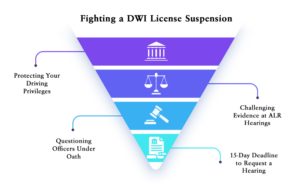
Think of the ALR hearing as an early opportunity for your attorney to legally open the State’s evidence chest and see what is really inside. Your attorney can look at why you were stopped, what the officer saw and did, whether there was a legal reason to stop and arrest you, whether the officer followed the rules, and what happened with any breath or blood testing.
Your attorney may also get the chance to question the arresting officer under oath. This can be extremely valuable because it allows your attorney to hear the officer’s story early and lock that story into sworn testimony that may later be used in your DWI case.
Instead of waiting for the criminal case to unfold, your attorney can start comparing the officer’s testimony with the police report, video, test results, and other evidence.
Does the officer’s story match the video? Does it match the police report? Did the officer make a mistake? Were proper procedures followed? Is something missing? Did something happen differently than the officer claims?
These are the kinds of things your attorney wants to find out as early as possible.
If the officer later changes their story, contradicts the evidence, or says something that does not match what actually happened, your attorney already has their sworn testimony. That can become powerful evidence for challenging the State’s case.
That is why we strongly recommend fighting the license suspension.
And there is very little time to act.
In Texas, you have only 15 days after receiving notice of suspension to request an ALR hearing, and failing to act on time results in an automatic, uninterrupted license suspension. You can start the process by requesting the hearing, and your attorney can then handle the hearing on your behalf.
Best of all, your attorney can often handle the ALR hearing without requiring you to attend, as these proceedings are frequently conducted virtually by phone or video conference. This means you may not have to miss work or put your life on hold while your attorney fights to protect your license and starts building your DWI defense.
And if your attorney wins the ALR hearing, which happens often at The Law Office of Ken Gibson, and your license is returned, that can be an important sign that the State’s case is beginning to unravel. If the State cannot prove what it needs to take away your driver’s license, weaknesses uncovered at the ALR hearing may also increase the odds that the actual DWI charge will not stick.
How Long Does a DWI Stay on Your Record in Texas?
In Texas, a DWI conviction remains on your record permanently because the state does not use a lookback period. While some states drop prior offenses after five or ten years, Texas tracks them for life. This means a conviction from decades ago will still count against you; an arrest in 2026 following a 1995 conviction is prosecuted as a second offense, carrying mandatory jail minimums and harsher penalties rather than being treated as a first-time incident.
Even though a valid conviction cannot be erased, Texas law allows many offenders to hide the incident from public background checks through an Order of Nondisclosure. To qualify for sealing, the charge must be a first offense, your blood alcohol concentration must be below 0.15, and no accident involving another person could have occurred. You can petition the court to seal the record two years after completing your sentence if you maintained an ignition interlock device on your vehicle for at least six months, or after five years without the device. While this keeps the conviction away from private employers and landlords, law enforcement, prosecutors, and state licensing agencies can still access it.
The only way to wipe the record clean entirely is through an expunction, which completely destroys all arrest and court files.
Can My DWI Be Sealed or Expunged in Texas?
In Texas, you may qualify to have your DWI expunged (completely erased from your record) if your case was dismissed, you were found not guilty, or you successfully completed a pretrial diversion program that resulted in dismissal, subject to eligibility requirements. If you successfully completed deferred adjudication, you may qualify to have your record sealed through an order of nondisclosure, while certain first-time DWI convictions may qualify for sealing after a waiting period of 2 to 5 years. Completing drug court or DWI court may also lead to expunction or sealing, depending on the final disposition of your case and applicable eligibility requirements.
What Are the Most Common Ways to Beat a DWI in Texas?
The most common ways to beat a DWI in Texas include challenging whether police had reasonable suspicion to initiate the traffic stop, whether there was sufficient probable cause to make the arrest, and whether officers followed proper legal procedures. Police must have a lawful reason to stop and arrest you, follow established procedures, and respect your constitutional rights. Field sobriety tests must be administered and evaluated correctly, while breathalyzer and blood tests must meet strict testing, calibration, collection, and handling requirements to ensure reliable results. Additionally, medical conditions, physical disabilities, medications, and other health-related factors may produce symptoms that officers mistakenly interpret as signs of intoxication. When law enforcement fails to meet these legal and scientific standards, the prosecution’s DWI case can crumble, potentially leaving prosecutors without sufficient admissible evidence to secure a conviction.
How Much Will an Experienced DWI Lawyer Cost?
Hiring an experienced DWI defense attorney can cost thousands of dollars, depending on the complexity of your case. A strong defense often involves an independent investigation, multiple court appearances, ALR hearings, reviewing evidence, and negotiating with prosecutors. At The Law Office of Ken Gibson, our initial retainer is the amount required to hire our firm, secure our representation, and allow us to immediately begin protecting your rights and building your defense. We offer some of the most competitive and reasonable DWI defense fees in the greater Austin area. To receive a precise estimate, simply submit your case details online, and we’ll contact you by phone, text, or email with a personalized quote, with absolutely no obligation.
Understanding Charges, Consequences and Alternatives
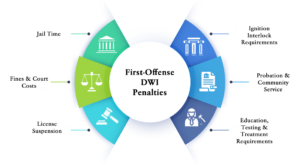 What Are the Realistic Penalties for a First-Offense DWI in Texas?
Although Texas imposes serious penalties for a first-offense DWI, that does not mean prosecutors and judges will automatically throw the book at you. The law establishes a range of potential punishments, but what actually happens depends on the circumstances of your arrest, the strength of the evidence, your criminal history, and how your case is resolved.
The potential penalties for a first-offense DWI in Texas include:
- Jail Time: 3 to 180 days in county jail for a standard first offense (with a mandatory minimum of 6 days if an open container was present); up to 1 year if your BAC is 0.15 or higher.
- Fines: Up to $2,000 for a standard first offense or $4,000 if your BAC is 0.15 or higher, plus an additional state traffic fine of $3,000 or $6,000, respectively, unless an applicable exception or waiver applies.
- Court Costs: Several hundred dollars or more.
- License Suspension: Generally 90 days to 1 year following a conviction, with separate administrative license suspensions possible (90 days for failing a chemical test or 180 days for refusing).
- Ignition Interlock Device (IID): May be required depending on your BAC (mandatory if 0.15 or higher), bond conditions, probation terms, and other circumstances.
- Probation: Commonly 6 to 24 months, depending on the offense and court orders.
- Community Service: Generally 24 to 100 hours for a Class B DWI or 80 to 200 hours for a Class A DWI when community supervision is imposed.
- Victim Impact Panel: Attendance may be required as a condition of probation.
- Additional Court-Ordered Requirements: May include random alcohol or drug testing, travel restrictions, alcohol education, counseling, treatment, or restitution when applicable.
But here’s what you need to understand: These are potential penalties, not necessarily what will happen to you.
Many first-time DWI cases are resolved through negotiated agreements, reduced charges, deferred adjudication (available for eligible offenders with a BAC under 0.15 who do not hold a CDL), pretrial diversion, probation, or rehabilitation-focused programs when available. Some cases are dismissed entirely, potentially allowing the arrest record to be expunged. Eligibility depends on the facts of your case, your criminal history, and the options available in your jurisdiction.
In reality, being arrested for DWI does not mean you will automatically be convicted, go to jail, or face the maximum penalties. For many first-time offenders, particularly those without aggravating circumstances, avoiding jail is a realistic possibility. However, even when jail time is avoided, a negotiated resolution may still involve probation, community service, an ignition interlock device, fines and court costs, probation supervision fees, alcohol education classes, a victim impact panel, random alcohol or drug testing, counseling, substance abuse evaluations, and possible driver’s license restrictions or suspension. A conviction is not automatic, but a negotiated resolution may still require compliance with court-mandated conditions.
What Are the Realistic Penalties for a Second-Offense DWI in Texas?
Make no mistake: while a first offense is often treated by the criminal justice system as an isolated lapse in judgment, prosecutors and judges view a second-offense DWI far more seriously. In the eyes of the court, a second arrest is seen not as a mistake, but as an escalating public-safety risk and an established pattern. As a result, the leniency commonly extended to first-time offenders largely disappears, and the state’s focus aggressively shifts toward deterrence, continuous supervision, and heightened accountability.
A second DWI is enhanced to a serious misdemeanor. While the law establishes severe penalties, what actually happens depends on how long ago your prior conviction occurred, the strength of the evidence, your conduct while on bond, and how strategically your case is negotiated.
The potential penalties for a second-offense DWI in Texas include:
- Jail Time: 30 days to 1 year in county jail if a direct jail sentence is imposed. If probation is granted, state law requires jail time as a mandatory condition: at least 72 continuous hours if the prior offense was more than 5 years ago, or at least 5 continuous days if the prior offense occurred within the past 5 years. However, jail time on probation can often be satisfied by credit for time served during your initial booking, or avoided entirely if defense counsel successfully negotiates to waive the repeat-offender enhancement or reduce the charge.
- Fines: Up to $4,000 in criminal fines, plus a mandatory one-time State Traffic Fine of $4,500 (or $6,000 if your BAC was 0.15 or higher), assessed upon final conviction unless an indigency reduction or waiver applies.
- Court Costs: Several hundred dollars or more in mandatory county, state, and administrative filing fees.
- License Suspension: 180 days to 2 years upon conviction (with a 1-year minimum if the prior conviction occurred within 5 years), alongside separate administrative license suspensions through DPS (1 year for failing a chemical test or 2 years for refusing, based on a prior alcohol-related contact within 10 years).
- Ignition Interlock Device (IID): Mandatory as a condition of bond while the case is pending, required during probation, and required to obtain an Occupational Driver’s License.
- Probation: Commonly 12 to 24 months (capped at a statutory maximum of 2 years).
- Community Service: Mandated between 80 and 200 hours when probation is granted.
- Victim Impact Panel & Repeat Offender Program: Attendance at a MADD Victim Impact Panel and mandatory completion of the state-approved 32-hour DWI Repeat Offender Intervention Program.
- Judge-Imposed Rules and Conditions: Because judges view repeat offenses through the lens of heightened scrutiny, court-ordered bond and probation conditions are far more invasive and strictly enforced. These routinely include:
- Total abstinence from alcohol, illegal drugs, and non-prescribed controlled substances
- Mandatory installation and maintenance of an ignition interlock device on every vehicle operated
- Frequent random urinalysis or continuous alcohol monitoring (such as a 24/7 SCRAM transdermal alcohol monitoring ankle bracelet or portable cellular breath device)
- Comprehensive clinical substance abuse evaluations and court-mandated compliance with outpatient or residential treatment programs
- Strict travel restrictions requiring written court approval before leaving the county or state, plus curfews and prohibitions against entering establishments whose primary revenue comes from alcohol sales
- Regular in-person reporting to a community supervision officer, along with monthly probation supervision fees and program monitoring costs
But here’s what you need to understand: These are potential statutory penalties, not necessarily what will happen to you.
Because deferred adjudication is generally unavailable under Texas law for a second DWI involving a qualifying prior intoxication conviction, defending a second offense requires a thorough investigation and an aggressive, well-planned legal strategy. Prosecutors are also far less likely to offer routine pretrial diversion, making it especially important to examine every aspect of the arrest, challenge weaknesses in the prosecution’s evidence, and prepare for trial when necessary. In some cases, participation in a specialized county DWI Treatment Court may also be worth considering.
In reality, being arrested for a second DWI does not automatically mean jail time or the maximum statutory penalties. For many defendants, avoiding incarceration remains a realistic objective. However, because prosecutors and judges take repeat offenses far more seriously, negotiated resolutions often involve substantial accountability measures. These may include an ignition interlock device, continuous alcohol monitoring, community service, fines, repeat-offender education, substance abuse counseling, strict compliance with court-ordered conditions, and driver’s license restrictions.
What Are the Realistic Penalties for a Third-Offense DWI in Texas?
In Texas, a third-offense Driving While Intoxicated (DWI) charge represents a serious escalation in the criminal justice system. Unlike a first or second DWI, which is generally prosecuted as a misdemeanor, a third DWI involving two qualifying prior convictions is a third-degree felony, carrying the possibility of substantial prison time, significant financial penalties, and a permanent felony criminal record.
By the time someone faces a third DWI charge, prosecutors and judges are likely to view the situation as more than an isolated mistake or lapse in judgment. Repeated arrests raise serious concerns about public safety, the effectiveness of previous punishments, and whether an underlying alcohol or substance use disorder is contributing to the behavior.
At this stage, alcohol dependency or addiction may become a central issue in the case. Courts are often concerned not only with punishment but also with whether the individual can achieve lasting sobriety and avoid another impaired-driving offense. Consequently, substance abuse evaluations, intensive treatment, strict supervision, and demonstrated rehabilitation can play significant roles in determining the outcome.
The potential penalties for a third-offense DWI in Texas include:
- State Prison Time: 2 to 10 years in state prison for a third-degree felony conviction. Certain prior felony convictions can result in substantially longer sentences through enhanced punishment provisions.
- Criminal Fines: Up to $10,000 in criminal fines, potentially accompanied by additional financial penalties.
- Additional State Fines: A separate $6,000 state traffic fine may apply upon conviction, subject to applicable statutory exceptions and waivers.
- Driver’s License Suspension: Generally 180 days to 2 years following conviction, with separate administrative suspensions possible for refusing or failing a chemical test.
- Ignition Interlock Device (IID): Generally required as a condition of pretrial release for individuals with qualifying prior DWI convictions and commonly required during probation or as a condition of obtaining an occupational driver’s license.
- Felony Probation (Community Supervision): May be available in eligible cases, often lasting several years. However, felony DWI probation generally includes a mandatory county jail confinement period of at least 10 days and may involve extensive supervision and treatment requirements.
- Community Service: Generally 160 to 600 hours when community supervision is imposed, subject to applicable legal requirements and exceptions.
- Substance Abuse Treatment: Courts may require comprehensive alcohol and drug evaluations, inpatient rehabilitation, intensive outpatient treatment, counseling, relapse-prevention programs, or participation in a specialized DWI court.
- Victim Impact Panel: Attendance may be required to reinforce the consequences of impaired driving and the potential harm to others.
- Additional Court-Ordered Conditions: May include random alcohol and drug testing, continuous alcohol monitoring, travel restrictions, mandatory sobriety requirements, regular probation reporting, and other restrictions.
- Permanent Felony Consequences: A felony conviction can significantly affect employment opportunities, professional licensing, housing, firearm rights, and other aspects of everyday life. Certain civil rights may also be restricted during the sentence.
 Potential Penalties vs. Realistic Case Outcomes
Although a third-offense DWI is an extremely serious felony charge, a conviction or prison sentence is not inevitable. The outcome depends on the strength of the prosecution’s evidence, the validity of prior convictions, the individual’s criminal history, and the circumstances surrounding the arrest. Even third-offense DWI charges can be dismissed, reduced to lesser offenses, or result in an acquittal at trial.
However, the stakes are considerably higher than in first- or second-offense cases. A felony conviction can carry life-changing consequences, including years in prison, and prosecutors are generally far less willing to offer leniency. As a result, preparing for trial becomes especially important. An aggressive defense requires thoroughly investigating the arrest, challenging the prosecution’s evidence, examining the legality of police procedures, and seeking to suppress unlawfully obtained evidence. When prosecutors are unwilling to negotiate an acceptable resolution, a jury trial is often necessary.
Beyond the legal challenges, a third DWI arrest may signal an underlying alcohol or substance use disorder that requires serious attention. When addiction is a contributing factor, proactively seeking treatment can become an important part of the overall defense strategy. Voluntarily entering rehabilitation, participating in counseling, maintaining documented sobriety, and demonstrating a genuine commitment to recovery may strengthen the defense’s position during plea negotiations or sentencing and support consideration for probation, specialized DWI treatment courts, or other alternatives to incarceration when legally available.
Ultimately, defending a third-offense DWI often requires a two-pronged strategy: aggressively fighting the criminal charges while taking meaningful steps to address the underlying issues that may have contributed to repeated arrests. Combining a strong legal defense with genuine rehabilitation efforts can help create opportunities for the best possible outcome, whether through dismissal, acquittal, reduced charges, or alternatives to incarceration.
What Are Other Types of DWI Charges?
Beyond simply charges of driving while intoxicated, there are several factors that may lead to more severe charges, as there are several levels of DWI offense in the state of Texas. Among these separate charges, some of the most common are:
Underage DWI: Under state law, those under 21 years of age or prohibited from purchasing or consuming alcohol. As such, rather than the legal limit of .08, anyone under 21 driving with any detectable amount of alcohol in their system while driving could be charged with Driving Under the Influence of Alcohol by a Minor (DUIA by a Minor).
Intoxication Assault: A standard DWI charge requires four elements for the prosecution: that you were (1) found to be operating (2) a car or other motor vehicle (3) while under the influence of drugs or alcohol (4) while in a public place. In the instance of a fifth element, causing injury to another person regardless of intention, an additional charge of Intoxication Assault can be added to the DWI charges.
Intoxication Manslaughter: As with Intoxication Assault, this charge requires that all four elements of a DWI be in place. In order to be charged with Intoxication Manslaughter, your actions while operating a motor vehicle under the influence must lead to the death of another person, either intentionally or accidentally.
DWI with a Child Passenger: This more serious charge results when you are found to have committed DWI while transporting a passenger younger than 15 years of age.
Driving Under the Influence of Drugs: Whether under the influence of illegal drugs or prescription medications, being found to be driving while on drugs can lead to greater consequences than simply being intoxicated by alcohol.
Understanding Blood and Breath Testing
Part of how the prosecution will attempt to charge you with DWI is by using the results of the Blood Alcohol Content (BAC) tests that were administered at the time of the arrest. A working knowledge of how these results are measured and what they mean can be a vital part of your defense. Getting these test results dismissed from evidence, or challenging their credibility, is how experienced attorneys help secure their clients’ freedom.
BAC Levels
What follows is a brief primer on the various levels at which your BAC might be tested during the initial traffic stop. Not only does your ability to function weaken as BAC increases, so do the potential legal ramifications.
.02-.06%
At this level you might experience reductions in your ability to track objects, operate your vehicle or respond to sudden emergencies. While still below the legal limit of .08, you can be charged with DWI at this level if you are under 21 years of age or hold a commercial driver’s license which carries a legal limit of .04%.
.07-.09%
A range just above and just below the legal limit of .08%, this level of BAC carries with it a reduced ability to control speed, process new information, apply brakes in a timely fashion, maintain your position in the lane and perceive the road ahead. Physically, at this point you will be mildly impaired in terms of balance, vision and speech.
.10-.12%
At this point, beyond the legal limit, you will experience sluggish response times in braking and avoiding hazards, impaired ability to control a vehicle as well as your own body, and significant loss of judgement.
.13-.15%
Adding to the significantly decreased ability to operate a motor vehicle, this level of intoxication brings with it severe physical effects ranging from vomiting and queasiness to substantial loss of balance and vision. As this extreme level of intoxication represents a dangerous situation behind the wheel, Texas law allows for much higher penalties for drivers who test at this level. This means more jail time, greater fines, and smaller chances of having charges reduced.
.16-.2
The greater penalties outlined above apply to drivers found to have a BAC at this level and higher. Apart from an impaired ability to operate a motor vehicle, this level of intoxication can lead to the inability to walk without assistance, loss of consciousness and/or bladder control and overall inability to function.
.35-.4
At this level of intoxication, a person can expect to lose consciousness and in extreme cases fall into a comatose state.
.4% and higher
At this stage, a coma is a certainty, with death by respiratory failure highly likely.
How Can I Challenge My BAC Reading?
As the standard police-issue breathalyzer simply measures the alcohol content of a driver’s breath, it cannot actually measure the precise amount of alcohol in their blood. This has been backed up by scientific research, which suggests that most breathalyzers have a shocking 50% margin of error when compared to measurements taken by blood. In addition, factors ranging from your age, gender, health and emotional state can all skew readings, as can your rate of consumption and any medications you might be taking.
This widely known unreliability is just one way that BAC readings can be challenged. If the breathalyzer device itself is not regularly tested for accuracy, routinely calibrated and carefully maintained, its readings can be skewed upward. While this maintenance is crucial, most police departments fail to follow proper protocols in keeping their devices accurate.
In addition, there are procedural mistakes that can skew the results of a BAC test, mistakes made on the part of the officer. As one example, police officers are required to observe anyone suspected of DWI for a period of 15 minutes to ensure they do not belch, vomit or inject any fluids that could alter the results. Official procedure dictates that they must restart the test if this happens, but officers rarely pay attention.
In addition, there are a slew of circumstances which can trigger false positives and skew BAC readings higher. These include:
- • Special diets like Atkins or keto which boost acetone production in the body
- • Digestive illnesses or diabetes
- • Eating certain foods before a test, particularly breads
- • Mouthwash, breath spray or oral treatment gels
- • Pharmaceutical medications of all kinds
- • Breathing in fumes from gasoline, propane or oil-based paints or varnish
- • “Mouth alcohol” produced through burping, vomiting, periodontal diseases or dentures|
High concentrations of naturally occurring alcohol, or chemicals in your body that mimic alcohol, can be found in your mouth or throat regardless of whether or not you’ve been drinking. And any one of them can skew a BAC reading.
How Can I Challenge the Results of My Field Sobriety Test?
More than any other piece of evidence that may be used against you following an arrest for DWI, field sobriety test (FST) results might just be the most meaningless. To begin with, complying with the officer in taking an FST is completely voluntary. You are under no obligation to take the test, and it really doesn’t benefit you because the test isn’t designed to determine your sobriety. It’s designed to help the arresting officer compile evidence against you.
Thankfully, even if you do submit to an FST, the evidence collected from them generally does not hold up well in court. As these tests were not designed with any credible scientific basis, they are notoriously difficult to pass, even by those who are stone sober. As such, there are numerous ways to have their results thrown out.
A skilled DWI attorney is one who is certified at FSTs, and can skillfully pull apart all the improprieties in the tests’ administration. If the officer failed at any part in administering the test, all or part of the results can be thrown out. Your attorney can also make the judge or jury aware of any medical conditions you might have, from obesity to injury and even neurological issues, that might have skewed the results of your FST.
How Can I Challenge the Results of My Blood Tests?
Although a blood test is considered the most accurate method for measuring blood alcohol concentration (BAC), it is important to recognize that issues can arise with the test process that may impact the reliability of the results. Your attorney might question the credentials of the person administering the test, or highlight any procedural errors that may have occurred. As an example, once blood has been extracted it must be stored with a preservative and an anticoagulant in a proper vial with a tamper-proof seal. Issues with any one of these requirements can call the integrity of the test into question. Your attorney might also raise questions about proper chain of custody for the test itself after it was administered, how it was stored or whether it was exposed to any chemicals which could affect the results.
Are There Other Ways to Challenge a DWI?
Many of the most effective ways to challenge a DWI charge is by closely examining whether the arresting officer followed proper procedure to the letter during the initial stop. In fact, the majority of DWI charges that are dismissed or thrown out entirely come from police failing to follow their own policies.
To begin with, the police must have reasonable suspicion to pull your vehicle over in the first place, if you are weaving in and out of your lane for example. Essentially, they need to show that the circumstances warranted pulling you over.
Even if they establish reasonable suspicion to pull you over, they must have shown probable cause to have placed you under arrest. More than reasonable suspicion, probable cause requires some form of evidence, be it physical characteristics like bloodshot eyes or slurred speech, the presence of open containers, an odor of alcohol on your breath or failure on an FST.
At nearly every step in the process, there are ways that an officer’s own prejudices or biases might tarnish their credibility. There are procedures that must be followed from the initial traffic stop on, and any errors can lead to a dismissal of charges. This is particularly important due to the lack of training most officers receive. While we’d like to think that officers are given proper instruction in determining if someone is under the influence, administering sobriety tests and checking BAC, the fact is they are often underequipped and uncredentialed.
The fact is, the science behind testing is questionable and the tactics used in determining sobriety aren’t grounded in reality. A skilled attorney can seek out missteps and errors in the case against you and use that to help reduce or dismiss your charges.
Invest in Yourself
An arrest for DWI does not guarantee a conviction. Those who choose to invest in themselves by hiring an experienced attorney, almost always enjoy the dividends or better outcomes. Beyond simply avoiding financially crippling fines and jail time, they can circumvent the long-term fallout from a DWI conviction which can hamper their ability to secure a job, keep their home and property intact, and live a full life.
At the Law Office of Ken Gibson, we strive to be the best investment you’ll ever make in yourself. We dig deeper into the facts of your case until we know every detail better than the prosecution. We collect the evidence that will exonerate you, do the research into the procedures that need to be followed and seek out expertise that casts doubt on the case against you.
We do all of this, because we know the secret to winning a criminal case. The secret is preparation, knowledge and a willingness to go the extra mile for clients. Call today to schedule a free, no-obligation evaluation of your case.

Online Reputation – 5-Star Score on Google
Research shows that 84 percent of people trust reviews they read online as much as recommendations from friends and family. At The Law Office of Ken Gibson, we are grateful for what our clients say about us in person and online, and we’re proud of the 5-star scores we have on Google and other online rankings.
Contact us today to schedule a free case review online and start planning your defense. Whether you hire our firm or not, you’ll leave the conversation with more knowledge than before, feeling empowered to fight the charges against you.